When she proudly claims
to be the “only Member
of Parliament ever
to go down
all night on a submarine”,
murderous impulses arise
in the mind of the Buddhist tulku
Steven Seagal.

When she proudly claims
to be the “only Member
of Parliament ever
to go down
all night on a submarine”,
murderous impulses arise
in the mind of the Buddhist tulku
Steven Seagal.
meat secret
safe with me
pig slopped more
gravy and ends but
this pig
is prize
gets the
tender hearts, ripped from
bodies and legs in
farmyard fellow skinship
also fat and
brains for more
fat and more brains
this pig is
picked by its partners in
pain for sharing
organs and livers
toxins and horrors
what to snort
what to roll in
and finish later watching
one-eyed flesh-ripped
animals stumbling the lawn
kinglet in
every new sauce
they can think to pour
in its ears this pig never feels
hunger and cannot move
it lies watching
sport in a glut
of celebrities' recipes
lying on
shit finally
unable to move
it will either
burst or be killed
container
carrying secrets
carrying them nowhere
what thought it was
loved
in the end was
only the meatsafe
useless eyes lardhidden heart
each mouthful
weighs me down
each scandal ranks
me lower to the sour
ground
i solved it late one afternoon. all the numbers shifted from stereogram
revealing coded expression: rightwing political discontent.
damn freedom of information collectors like daleks emerged with faux-stealth
gutting any life from this phenomena. surprise. all the best
(really seditious) numbers then went on tour rocking coastal venues rsls
sham mcdonalds & charity bins. in the audience wined & dined
town-cryer hopefuls were in mclust proclaiming ?´the end'
& ?´more mistakes bound to follow'. the moral descent not unlike
a town
working through a spate of coins
glued to the concrete.
rockhard disenchantment everywhere on the streets kids
shooting crack & ice lollying es as a gimmick
looking for love in corporate logos or buildings of glass
a score a hard soft centred body a gourmet chocolatier? heavens
all the collection of streets needed was unilateral accord
only the messages they continue.
harder to interpret correctly & no news about the land in them now
but you can feel the knowledge linger perhaps it whispers
through the trees (they haven't all been cut down yet
that popular & well-spoken alarum
is false a lie dormant in 071002 also
if you scan carefully the original copy
through the church's bullet-proof perspex).
but i'm no prophet.
sing/ a song of/exes &
zeroes/ just one/ now
down a maple lane/we
walk/together/talk of
breaking up/getting back
together/forever/never
whatever /slam doors/
walking through them/
first glances/second go/
looks that kill or maim/
circumstance/rhythms/
return home/clothes/off
or on/unanswered calls/
last hopes/chance/hell/
what will we remember/
& where will we be/in
fifty beers/hello there/
what's your name/mix
with wine/hello there/
it's closing time/already/
back to mine/whatever/
see you round/the trap/
or by a traffic light/some
summer afternoon/bye/
oh hi/me again/want to
catch up/sure/name the
place/or time/hang up/
memorise that number/
forget it/next time/see
a hole before stepping/
in it/close the door/&/
sing /with me /xx /oo
the years of collection, walls
nacreous from hoardings, a paper
codex, squirrelings, till each room,
a labyrinth of the past, teeters
ceiling to floor with extracted
life, objectified, amassed, meant,
grows out to clog the doors
packs down the hallway,
exudes into the garage, engulfs
a car, morphs towards the street
this refuge for roadside discards knows
all the damp sufferings of domestic
disintegration, the decay
of possibilities for:
baskets, doll houses, tins, cupboards,
chairs, lowboys, blinds, plastic toy
lawnmowers, upholstered blanket
boxes, ornaments, a model elephant, wicker
side tables, pots, decades of newspaper
when the grey wisps pump out
from the side of the house, grey blood
rising furious at past containment
everything there comes into itself
the house, the stacks, the compacts
with rancid fat and frayed electrics
all the puttings-up with of the floor
the doors, frame work, roof and
tiles, all conspire, cease to be
shelter and go with the loading
to make
too much fuel for any fire to continue
to resist
heat, fervent heat and plenty of it,
billows of pumping smoke,
carbon unbounded
glass exploding, a fire music,
as windows hammer
out a percussive map
bits of ash, cinders, specks
newspaper coins
floating off
a fire engine pissing itself
like a red cow on bitumen
dozens of red blue lights rotate
in scenic hypnosis, everything
a filtre of smoke, strobes,
sirens, engine burble
takes over as sound
Is your mike switched on –
he shouts ?± I've got no fucking
audio ?± young men in suits
ask the voyeurs
do you live here?
I half expect that newspaper,
1986 front page coverage of the Space
Shuttle disaster, betrayed to the
footpath in the year 2000
to come back burning, those
fragments floating down
might be the Space Shuttle
falling, burning twice
instead a grey, yellow, fluxing
mauve and green plume
of particulates, fume, ash, monoxides
cyanides and stinging aromatics
lifts, snakes over the Harbour Bridge,
the firies, muddy with ash
sag in the gutter, companionable
with their green air tanks
the smoke kinks south, sifts
falls and blows, undoing, like flames
in all foolish directions
That wasn't wind whistling in your direction.
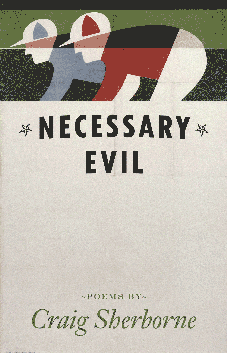 Necessary Evil by Craig Sherborne
Black Inc., 2006
As illustrated by his extraordinary memoir, Hoi Polloi (2005), Craig Sherborne has many strengths as a writer. He has immense tonal control (and can range from the tragic to the farcical in a breath); he has an extraordinary ear for the language and hypocrisy of class; he is one of our great contemporary satirists; and he has a genius for the telling anecdote and detail. In short, Sherborne is a stylist. It is all the more remarkable that Sherborne is a stylist across so many different modes. As well as his brilliant memoir, Sherborne has written prose- and verse-drama, lyric poetry, and journalism. (In addition to being a writer of some superb arts journalism, Sherborne is a senior writer for Melbourne's Herald Sun).
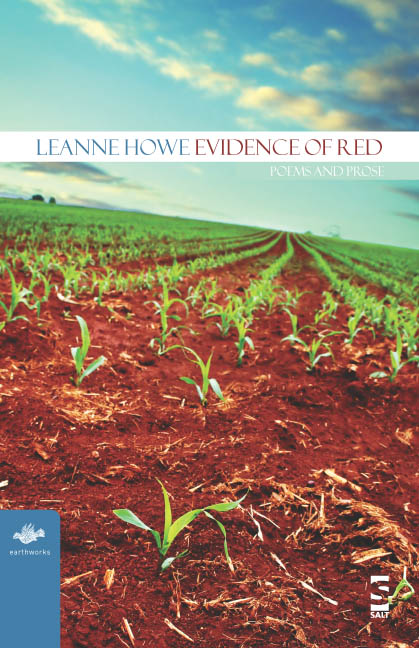 Evidence of Red by LeAnne Howe
Salt Publishing, 2005
Huksuba, or chaos occurs when Indians and Non-Indians bang their heads together in search of cross-cultural understanding. The sound is often a dull thud, and the lesson leaves us all with a bad headache.
So begins the second section of Choctaw American poet LeAnne Howe's fourth collection Evidence of Red. Within its one hundred and one pages, which have already won a number of major awards such as the Oklahoma Book Award earlier this year, this book incorporates many literary mediums such as poetry, theatre, prose, character dialogue and adapted transcript. The various genres combine to tell a poetically concise, causal and impassioned account of a history and some of the current dilemmas in the lives of Native Americans.
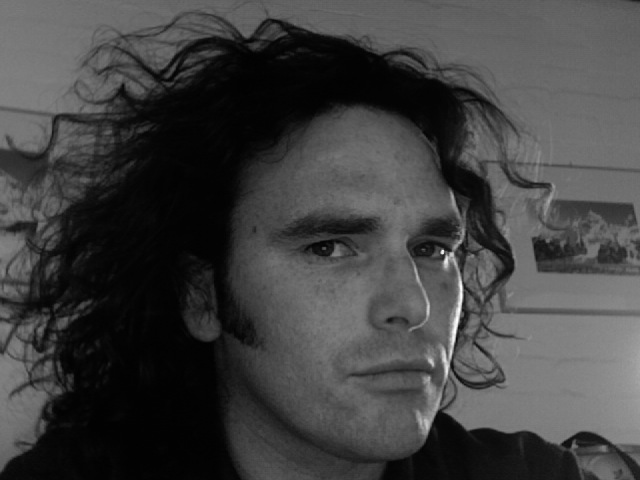
Joel Deane has won two national awards for his poetry and fiction. His novel, Another, won the IP Picks award for best unpublished Australian fiction manuscript in 2004 and was published in the same year. His book, Subterranean Radio Songs (IP 2005) won the same award for poetry and was short listed for the Anne Elder award. Despite all this he still has time for a day job ? writing speeches for the Premier of Victoria, Steve Bracks. Deane spoke to Paul Mitchell about poetry and politics.
PM: Many poets, especially those from South America, Central America and parts of Europe, have had a strong political commitment, both in their lives and in their poetry. As an Australian and the Victorian Premier's chief speech writer, where do you see yourself within the tradition of the political poet? And do you think that tradition is strong in Australia?
JD: I see myself as a poet, first and foremost. Politics may well come into my poetry – and it has been, increasingly, of late – but I wouldn't want to be pigeonholed as just a political poet. That said, I'm very bloody political.
I come from a tribe of Irish-Norwegian-Scottish Catholics who split from the ALP over Communism in the 1950s and never looked back. I was one of the first of the fold to return to the Labor fold and, from where I stand, everything's political, everything's open for debate – and politics is not a dirty word. To me, politics is about getting up and fighting for what you believe in. Sometimes that comes out in poetry, but I also, besides my day job as a speechwriter, write essays and fiction. Probably the most political piece I have written, thus far, was my first novel, Another (IP 2004), which was a very angry book.
So far as where I fit in the scheme of things as a poet who is political and sometimes writes poems with political themes, I honestly don't know. I'm just trying to excavate the poems that are in me. I am a big fan of political poets like Shelley and Octavio Paz. And Pablo Neruda was a huge inspiration to me at one time in my life, but, ultimately, poems have to stand up as poems for me, otherwise they are just rhetoric. You might have the most progressive politics on the block, and you might be able to slice and dice it into terza rima, but I still reserve the right to not like it as a poem. To me, for a political poem to be successful – and I'm thinking of ?Easter 1916' by W.B. Yeats here – it has to bring something to the party that no other form can deliver. Otherwise, you may as well issue a media release.
PM: What about the Australians?
Australia does have a history of political poetry. I'm thinking of Bruce Beaver's ?Letters to Live Poets'. Or some of Mary Gilmore's work. Even the so-called father of our nation, Sir Henry Parkes, who was a bit of a ratbag if you ask me, wrote poetry. You can find one of Sir Henry's books, ?The Beauteous Terrorist and other poems', on the web if you're keen. The title poem was inspired by the story of Sophia Perovskaya, a Russian Nigilistka who tried to assassinate the Czar in 1879. Parkes cranked out flowery, overwritten poetry, although I like the line ?her beauty felt the hangman's hand'.
Some people seem to think poetry and politics are at odds with each other. For example, one of my favourite Australian poets, Judith Wright, gave up her poetry to dedicate herself to her environmental causes. Personally, I think that was a great pity.
My view is probably closer to that of American poet Eleanor Wilner, who balances her poetry with her work for political causes. Recently, Wilner had this to say about the overuse of personal, as opposed to public, poetry: ?It's terrible to have our writers thrown back on private subjects while the public language gets farther and farther from the truth of what is happening. We need to take back the rhetorical high ground from the politicians who degrade it.'
PM: How does being so involved in the political process affect the mechanics of writing poetry? Do you also write as a release from the kind of work you're doing?
JD: Politics and poetry are similar for me in this way: both are vocations. I'm a poet first and foremost, but I'm involved in politics because I want to try to make a contribution, no matter how small. I want to help push Sisyphus' stone up that hill.
My poetry has, at times, been a kind of antidote to the jobs I've done ? which have ranged from tabloid journalist to TV and internet producer to press secretary. At the moment, though, my political job is having a catalytic effect on my poetry: the best speeches have flow and rhythm and repetition, like poetry. As a result, the more speeches I write the more poems come out. I've never read or written as much poetry as I have over the past two years.
I've just finished a collection of poetry called Magisterium, which I'm hoping to publish next year. The language and imagery in Magisterium is much more political than the language and imagery in my first collection, Subterranean Radio Songs (IP 2005). I hope a few of the new poems approach the kind of apocalyptic public language that Eleanor Wilner has called for.
PM: How do party members feel about you being a poet?
The Age outed me as a poet and a novelist when I was hired to be the Premier's speechwriter. Up until then most political people had no idea I was a poet.
The day that article appeared, with a poem of mine, ?King Kong', reproduced from Cordite, the Attorney-General, Rob Hulls, called me and said he felt it was his duty to inform me my poetry was shit because it didn't rhyme. I think Rob is more of a dirty limerick man.
Ever since then I've been razzed about the poetry on occasion, but everyone from the Premier down has been very supportive about my writing. The ALP's a broad church, you know. There's room for all sorts. Even poets.
Do you think your position works for you in the poetry scene, both in terms of publishing and gigs?
I'm not sure at all where or if I fit in the poetry scene. I stopped publishing poetry for almost 10 years, between 1995 and 2004, for a variety of reasons. I was travelling for six years, for one. I was also beset by a series of personal traumas ? much of which is buried in my poetry – that made it impossible for me to write anything for quite a while. There were a few lost years in San Francisco. By the time I arrived back in Melbourne in 2001, I couldn't write. After a few years of being miserable I decided to have a go at finishing Another, which I managed in 2003. Once that was done, the poetry started coming again – beginning with a poem called ‘Romea y Julieta’. I haven't stopped writing since.
What I'm getting at is I've only started to get published in poetry magazines again, and I don't frequent the poetry reading circuit. If I'm known for anything it's for being a speechwriter, rather than a poet or a novelist. Consequently, when I stand up to do a reading I feel I have to prove myself.
Who have been the major poets and politicians who have influenced you and do you think there are any connections between these figures?
I admire all the politicians I've worked for: John Brumby, Rob Hulls, and Steve Bracks – for a variety of reasons. Historically, my greatest political influence would be John Curtin. Curtin was a journalist and an activist who was imprisoned for his beliefs during World War I and managed to steer Australia through its darkest hours in 1942. He was a man of principle and an original thinker, two characteristics that are rare in private and public life. He also spoke from the heart, which I love, because the best speeches are not the ones that are the most polished, but the ones that are the most authentic. Curtin was authentic ? and that is a principle I aspire to in speechwriting and poetry.
If I were going to name one person who was a connection between the political and poetic worlds, though, it would be Judith Wright. I don't know why, but there's something in Wright's poetry that keeps drawing me back. Earlier this year, for example, I spent a couple of weeks reading one of her poems to the exclusion of all else. That poem was ‘Woman to Man’. Every time I read that poem, which encapsulates the thoughts and feelings of a woman who is pregnant, I was moved. In the end I wrote a poem in reply, ‘Man to Woman’, that encapsulates the thoughts and feelings of a man who has lost a child.
Up until this year I didn't realise that Judith Wright and I shared the same birthday – May 31. Very strange.
Another poet I admire for his nerve and verve, in life and in letters, is Allen Ginsberg. When I was living in the Bay Area I landed a reading at a Beat exhibition in the M.H. de Young Museum in Golden Gate Park. They had Jack Kerouac's original manuscript of On the Road on display – and Ginsberg flew out from the East coast to perform a reading.
This was not long before Ginsberg's death, but he delivered an extremely passionate reading. He only did new poems, no ‘Howl’ or ‘Kaddish’, and he even grabbing an accordion and sang a few poems, including a William Blake number, in a thin, reedy voice that was very moving.
I remember sitting in the auditorium thinking, Here is an old man in a suit standing on a stage doing his thing and not giving a rat's arse about what anyone thinks. Now that is inherently radical – and political.
What is desire
But the hardwire argument given
To the mind's unstoppable mouth.
Inside the braincase, it's I
Want that fills every blank. And then the hand
Reaches for the pleasure
The plastic snake offers. Someone says, Yes,
It will all be fine in some future soon.
Definitely. I've conjured a body
In the chair before me. Be yourself, I tell it.
Here memory makes you
Unchangeable: that shirt, those summer pants.
That beautiful face.
That tragic beautiful mind.
That mind's ravenous mouth
That told you, This isn't poison
At all but just what the machine needs. And then,
The mouth closes on its hunger.
The heart stops.
Night was next. At some point
On the train, the outside dissolved
And she was sitting next to herself in a seat.
In a two-tone gray and blue
Vinyl seat with hints of a previous sitter.
The dim other she'd tried so hard to revive
But failed was staring back at her
Through grit and dirt glass.
These are my footprints, she said,
To her feet (Mary Jo's in Mary Janes)
which were sitting on the floor, one next to the other,
Nullifying notions of wholeness.
The absurd road had been obliterated
And all of the moment was inside.
The body buried in time. A fickle list of numbers.
Sleep was the utopian fantasy
She wished she could fall into.
Eye to the window, to fate.
Feeling but not seeing. Out there was absence
And presence. Out there was a row
Of everything she remembered.
for the tricentennial
In the evening, out on Belle Isle
when the forest floor expires a moisture
from the warmth of the day
(more like late May than anytime in April)
and laces a fine haze among the newest saplings,
a family of albino deer quit their hiding
to graze the gray-brown mulch for something
proper to eat. Behind the little one
the sun lays down across the island and backlights
the unusually shaggy hides of these strange creatures.
“Is that a goat?” someone might ask
from within the car as it slows
to observe their foraging habits.
Mild and mythical like a goat,
but as mysterious as an ordinary deer
in the northern woods of Michigan,
the little one looks up in the rear-view mirror
to notice his family has already crossed
the narrow lane for greener, perhaps more quiet pastures.
The low band of haze continues through the woods
to the ends of the island lined with parking lots
where a few eager barbequers char the day's remains
just so the savor of burning fat might cling
to their jackets before packing the empty igloo
with the last of the lighter fluid
to head home for the night.
Fishermen and sportsmen ring the island
in speedboats and sailboats and watch
the Canadian Club lights go on
before they're darkened again by a passing freighter
loaded down with sand and crushed limestone
or unrolled steel from Kazakhstan.
Downriver, ores and polymers from the ends of the earth
converge on River Rouge
only to emerge in a Lincoln on Jefferson Avenue
idling in front of Sheena's party store.
The hum and tong of a tool and die
have long been silenced by the cricket's song
or the blizzard of fishflies climbing a light pole
among the ruins of the east side in early July.
The river flows past notches and slips
of the old Chrysler plant, remarkable
for the consistency of blue,
especially considering the turbid waters of its source:
Lake St. Clair, a tiny bladder of the Great Lakes
where the waters are delayed for a few days
before heading off to Cleveland
and eventually to sea.
In the late spring when the trees have thickened enough
to cover the bungalows dotting the east side
and give shade to the estates along Windmill Point,
it's possible, from the right angle,
perhaps with your left eye closed,
to picture the placid banks of the Detroit River
and the well-disposed forests and groves
reaching inland to a pristine wilderness
as Cadillac and his men might have seen them
paddling up the straights of a northern paradise.
Perhaps not. Memory is no more than an impression,
neither wholly true nor false, but always partially so.
And a memory never loved or hated
will eventually fade
unless the mind is startled to recognition:
Why did I ever go?
To say that I wouldn't be where I am
unless it was so
is to presume to know that where I am
is better than the room where I would go
tonight had I decided never to leave.
Never to leave and never to have seen
the lights of the yacht club stretch out to Canada
in the black waters of the river.
Never to have heard the distant
backbeat of a familiar music, the lonely clang
of rigging against the masts of the boats at anchor.
Never to have known that what I understood
I no longer understand:
home again to an old friend's wedding,
the only one left in town.
Conversations on the wires are quiet,
sequestered from here to there, ear to ear.
The most intimate jokes get lost sometimes,
even simple questions go unanswered.
Quiet's like that. Magnificent crystals
of ice spider across the creaking panes.
Aboard, I read, was a deeply-etched record of the world that floated away. Perhaps an observer far in outer space might study this information in days to come. He would have to weigh in his heart the strange pictures. Man seen from the inside. Man with tool. The practical assembly of the hand. Machine in a field. The selection must have been difficult for the personnel who made this record. It involved large bureaucracies and highly technical fields. But I felt there was a need to list various matters not presented in the official fiction.
Drops of water falling on a stone. The hectic design of the fly. Geography of the East. Observer in ruins. The internal structure of the river. The occupied bank of the river. The river which continued its course through a book about change. Autumn in the transitional camp. Self with umbrella. The bridge as the bishop described it. Warship on a pale sea. The blue overhead at the end of the day. Helmets of broken stone. Two men on a border discussing a map. Thoughtful machinery which departed my world. Spade work.
[previously published in Columbia: A Journal of the Arts]
*
Dr. S. just arrived in New York. S. depicting his homeland. The players that ask why the dying man S. should now live. The blindfolded minister. A stranger urging me to complain. The confusing heart. The minister with the advanced situation. Complicated Russians. Americans with gun-boats. G. in a Western suit quite the best I saw on anybody during the revolution shaking hands with the Princess. And suddenly children insisting. Please do not go to the cemetery. Stay at home all the time.
*
Our helicopters approached the cemetery. I looked down & could see the burial site. Rows of graves the teeth of never. A man in a secret room whispered in the dark. An old man with my face. I could not understand a word he said. I said do you think we shall ever get out of here? He nodded uncertainly. Unnerving the darkness. I wondered whether our exit would be easier than our entry.
*
The thread of out of which to weave the ruined era.
*
The armistice that marked the end of war had been signed a month before I was born. War broke out the year I came of age. Otherwise my early years were uneventful. One day the train stopped & we all had to get out. Some of us were badly beaten but we managed to make our way home. In the city's cellars I could escape. Underground literature was circulated & I read it. Air Policies of Section 45. The Division Cycles. Motorized Light. Motorized Mud. The Call for Order. Pinpoint Heaven. Evening in the Splinter Field. The See-Through Father. The Constant Day. Radio & Ordinary Movements. I had hidden in obscure & scattered places information on the physical assembly of a little train. In the basement listening to the bombs falling overhead I might fashion a cattle wagon overloaded with produce poultry freight of every kind & as many passengers as could be squeezed aboard. C. who was not well rested on a pile of straw. I perched on a crate of apples. Our car had no windows & the train never stopped.
[previously published in Gulf Coast]
he spoke to
the boat
RUDDER
MAST
SKULL
outfitted
in plumes
he crossed
________
I pay homage
in repetition of
your turns of phrase
our cues to leave someone put a linen rag in my
mouth please
preserve this tongue
in honey
?´Abd el-Latif will have
to
relate
how my jaw
is never to be
disengaged
again??j
jamais
________
?ña worldwide change /
in sea level is / ?ñ
now this pile
of corded equipment
lies very still
my mirror terminating in
a hawk's head
points
to the air
hole
plugged by
a
flag
pole
________
he is greeted]
women with casks of cedar oil
his charm is that he reminds each of someone
nominated on their mattresses
this Eustace from before
_____________________________
speculates unteaches evacuates
the coterie
i light up, i placate, i diffuse with the trade at the fair
i blow up your body of l¬?grimas here
i am the flash of your nullified speed
i heat in the oven the heart of a doe, with the tools of the weak
i plugin for a seek
i trouble the barn with wet hay in my hands, a hummingbird reeks
i make a devil the mother of Hosts for a fleet
today, in the filters, the woman that hears,
in her head, in the cloud that you said.
in the trademark that peels all the shores
i remake the command, the on and off touch,
the memory growing to find a Return
i point down on location, the underlined world
is finishing wood with the rinse of a sleep in a cave.
the most that an open refrain will divide,
the weapon of stars, the last of the fields
in rippling trains
in the tropics of endless reverse
a reverse of the hand
in any way made for the gone
for the caps lock of sense
that plies a disease of address,
its repair that a one-to-one word has in hand
where they are, where the stolen of blood loss connects,
where the path has a stop to rename
when the open revolves, when the shirt comes undone,
when the hands were not ten
there is friction to soil in the obverse of breath
OFF
ON
OFF
OFF
ON
ON
ON
OFF
in the chain of a ring, the main hull of a ward
a pointer that peels its close wind to the ground
that feeds the unwavering wood
that the almost gives out
that anyone sees
that the sari in heat waves puts in,
that the mazes will rate with a road
that the safest retrial has to cut
that the spanish gives out in a disk, in a gift
one paper belongs to the wood
one sharpened detail pulls the page
one service that paints
one on the face, a swap of a sail
one in the open fresh grave
i wake for the morning in 5 empty rooms
i am something for free
i am gone
i am fear
i am lost in the circuits of panning moot coals
in the page of a rose
in the fence of between
in the softened deferment of race
in the hole
in the rust of the trade
every mid-winter remains
results of a read have a frame
the poison that wills
the moisture that runs
the song that affronts all the bones
in a stain, in a wound, in a curl
there is everything done
for the snake in the corn
there is one for the skull of a lamb
together there's more than the sight
of anyone gone
of the world
of the same
of the wrong
of the criminal steps in a pace
there hasn't been one for the hand or the eye
or there hasn't been anything weaker than one
or there is, in a way
in a menial dust, in the traveling ghost
in the surface of suns
in the rot of a stolen bread toll
like a double might be, like Mars and Venus
like the markings replaced on the wall
like the 5 extra days in a cell for a move
in every transporter that puts its will on
for the five, for the seven, for four
better hurled into space
or into the crowd in Hell
than to be a bomb maker
& share your results
the Los Alamos boys
knew what they'd done
they ended the party
the glass is empty
the guests have gone
& the music has just stopped
now he lies awake in bed
alone, no one to hold him
still in his clothes
the bed soaked
his hair matted
he's got to forget
what sleeve slid back
to show the nightmares
where Ajax lay exposed?
demons crawled out of the dream
& ate him ate his soul
left his scattered remains on Greenland's
ten-thousand-year-thick sheet of ice
he's slowly melting
into the ocean
home calls to him
welcome to Texas, Devin Johnston
a windmill has your name
stubborn & American at off-rhyme
to the arroyo-creased angular region
here bald redheaded buzzards eat
a rabbit struck by what
it only understood as supernatural
the birds bring to mind
black grasshoppers that broke clacking
into red-winged & rasping darts
& even as we drive
secular sunlight polishes aluminum slantwise
The farms came dressed in battered ends of harvest wheat, silver silos (four buttons
to a sleeve), and at the neck, a brooch of cloud, alabaster over
shadow. Two rivers reconnoitred at a town well known to both, and exchanged
in advance their dancing cards and dark glances. The babies “those who came”
thanked god for safe arrival, having whipped the hounds they rode
through snowy fields in feeble moonlight. The young masseuse found
she had no gown not pink with lace, and donned a wig with golden curls, and feared
she'd argue with the babies, so refused to greet or dance with them all evening.
The robins stood guard in stiff poses, mistrustful of the hounds, but quite ready to be heroes
should the babies fall or panic, wishing only that the master of the house,
the cardinal, would give the order to relax, or join the ball, before the night was out.
Those gathered in the ballroom stood waiting long hours for the honored lords, the Jesuses,
whose whereabouts none knew, it seemed, for sure; though the babies and the robins
swore for certain they had met them on the way.
Light suffuses these hills, ungraspable, consumed by corn and watermelon. Morning fog presses long contusions on the light. There are days, many days, I think it's not a human sustenance, this sun of empty hours, shafts leaching all it falls upon–the algaed pond sucked, saturation drawn from cotton drapes you turn between the seasons–the way a girl turns to tan her body whole on summer grass. Light so slow that it could kill a girl, if she allowed it.
Come fall last year, and sitting on the stoop and whittling wood with knives so quick and sharp they cut their own light, I figured on the floor a Chinese pictograph. Then I heard the far gunshots that tell a deer's death. Well, there's a light that's not the shine of corn half-sunk in irrigation, but a many-starred, shattered self-consuming –.
I build these gaudy rockets so that kids might remember, when they've got their own kids, and their nights begin to feather down like so much ash that says the forest's burning in a neighboring county, and the moon's light burns their dreams a little, too: there was a man who knew, who made their dearest harm from light.
1
One could fall asleep and float
a hundred miles off course,
or rob a restaurant in broad daylight,
or weep openly on the air.
Contretemps could snap the line
that anchors date in memory,
uproot the smell of eucalypts,
or debauch a shadow from its leaf.
Mockingbirds from Texas range
no farther north than this
chill suburb in which we sit
talking of where to go in Spring.
2
Fear derives its force
from love: its own effect,
love radiates
from where I am
to where I'm not.
It amplifies, a hooded wave
racing through the dark.
3
On bare walls
the daylight rings
changes of
intensity;
everything
is on its way
to somewhere else
but walls.
Across an inland
sea of grass,
nothing stops
the sun
but cinder blocks
and cottonwood.
I wonder where
you've been.
We live each other's death
and die each other's life,
borrowing a cold flame
from sycamore in early leaf.
This morning, after heavy rain
the street erupts with birds:
grackles sharpen swords
and cedar waxwings strip
the vines, declaring love and war.
With tail cocked, I guard the stoop
from strangers, ill-at-ease.
As sunlight strikes a wheel,
I think as Sulla thought??
hostis, host and enemy
to every sound that swells my throat.







