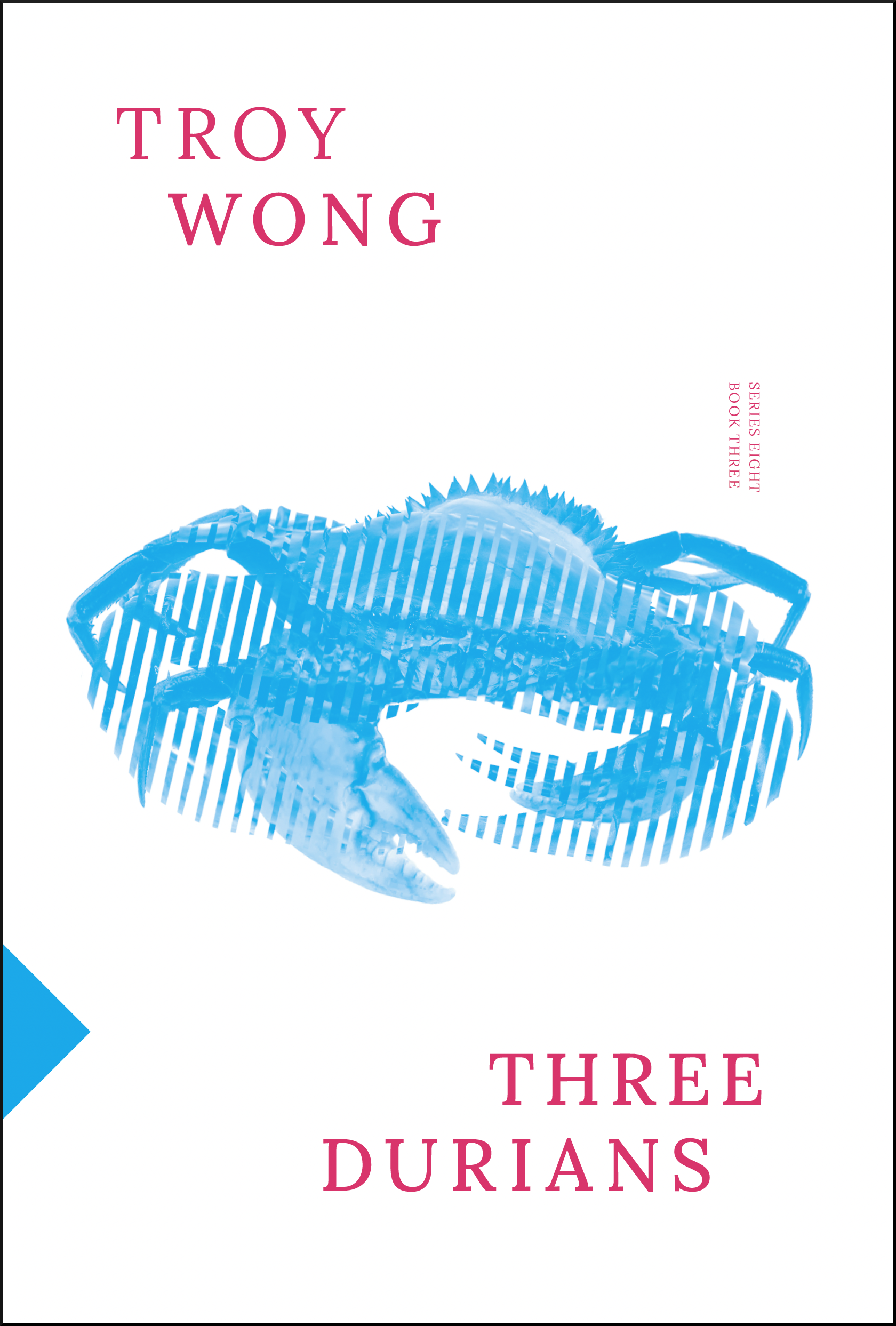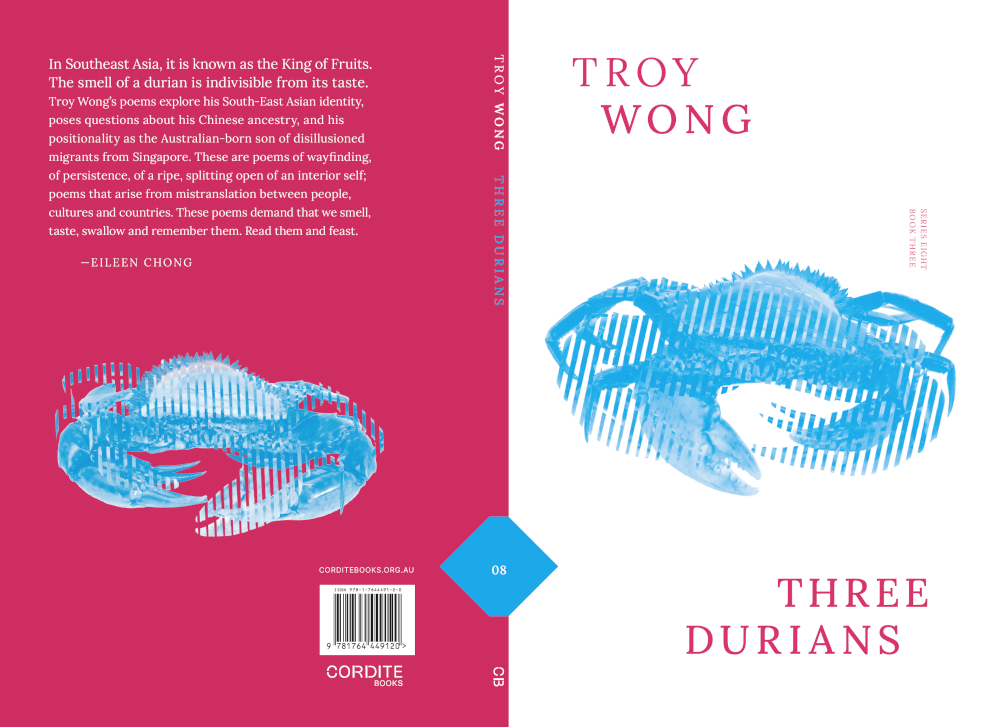
There is no fruit in the world as divisive as the durian. It is a contradiction in itself: a pungent fruit with a hard, spiky shell that opens in segments to reveal rich, creamy flesh that is incomparable in taste to anything else in the world. Troy Wong has chosen to refract his debut collection through the metaphor of this unusual and (depending on where you are and/or come from) ubiquitous fruit to great effect.
The word ‘durian’ is thought to have originated from the Malay duri, meaning ‘thorn’, and it has been a prized crop for time immemorial among the Dayak peoples of Borneo and the Orang Asli of Malaysia, although it has only been known to the Western world and to China for about 600 years, with its earliest written mention appearing in Venetian merchant Niccolò da Conti’s travel records of the 15th century. In Southeast Asia, it is known as the King of Fruits. Yet this same fruit is also banned on public transport and in public spaces and hotels in countries such as Singapore, Hong Kong, Japan and Korea due to its infamously strong, pervasive aroma.
When I was a teenager growing up in Singapore, I remember watching a short clip on the internet in which a roving reporter asked people on the street in small-town America what a durian was. Most people were confounded, but one man eventually hit the jackpot: ‘It’s a spiky Asian fruit that smells like SHIT!’. In April 2018, 600 staff and students were evacuated from the RMIT University Library in Melbourne due to a suspected gas leak. The source of the smell was traced to a rotting durian fruit left in a cupboard, the stench permeating the entire library through the air-conditioning system.
The smell of a durian is a powerful precursor to its taste and texture, its fecund presence. Smell is one of the most difficult senses to convey in a poem, but mention durians and smell permeates all. The smell of a durian is indivisible from its taste. Durian coats your tongue, clings to your fingers, returns on your breath and embeds itself in your memory – and Troy Wong’s poems do the very same. You feel these poems in the back of your throat; their presence lingers for days. These are strikingly original poems that are unlike anything else I have read before.
Troy Wong’s poems explore his South-East Asian identity, pose questions about his Chinese ancestry and examine his positionality as the Australian-born son of disillusioned migrants from Singapore. Like the durian, his is an experience of liminality and contradiction, of divided opinions and ambivalence. He questions what it means to be an Asian man in White Australia, exploring performative and relational masculinities and sexualities, and the alternate, possible selves of the old country and the new. These poems display a deeply considered poetics of extremity: he isn’t interested in performing a palatable version of Asianness for himself or for anyone else. These are poems of wayfinding, of persistence, of a ripe, splitting open of an interior self; poems that arise from mistranslation between people, cultures and countries. They are fierce, tender poems of dreaming and escape, of the body and flesh and spirit. These poems demand that we smell, taste, swallow and remember them. Read them and feast.