
David Prater’s singular punctuation mark is the parenthesis which Renaissance humanist and theologian Erasmus, an early booster of that particular glyph, dubbed lunulae; translation: little moons. It is a perfectly Praterian coinage that encapsulates the waxing and waning halves intended to quarantine asides or afterthoughts. But in Prater’s work, more often than not, the waning bracket appears without its waxing reflection, fostering ambiguity and opening up a poem’s possibilities, particularly when used in rapid succession:
CCed Gaia but bounced. So it goes … (that manual exchange
inside a Powerhouse (a museum exhibit etched in charcoal
rides the lightning (killing composers, developing in still-life. (‘Wireless’)
It is worth considering where the first missing bracket would be placed if punctuation were being used conventionally. Probably after ‘sent’, though the information it would contain is hardly an afterthought, indeed it transforms the meaning of the second part of the sentence. The ambiguity expands with the second missing bracket. Should it be deployed after Powerhouse or is the third (even the fourth?) opening bracket nested inside the second? These questions expand exponentially through the poem, turning into a kind of magic box, a steampunk automaton that, once a mechanism is triggered, takes on a life of its own, all spinning cogs and whirring gears. The possibilities the open brackets create propel the poem towards, as Baudelaire put it, ‘l’expansion des chose infinies.’
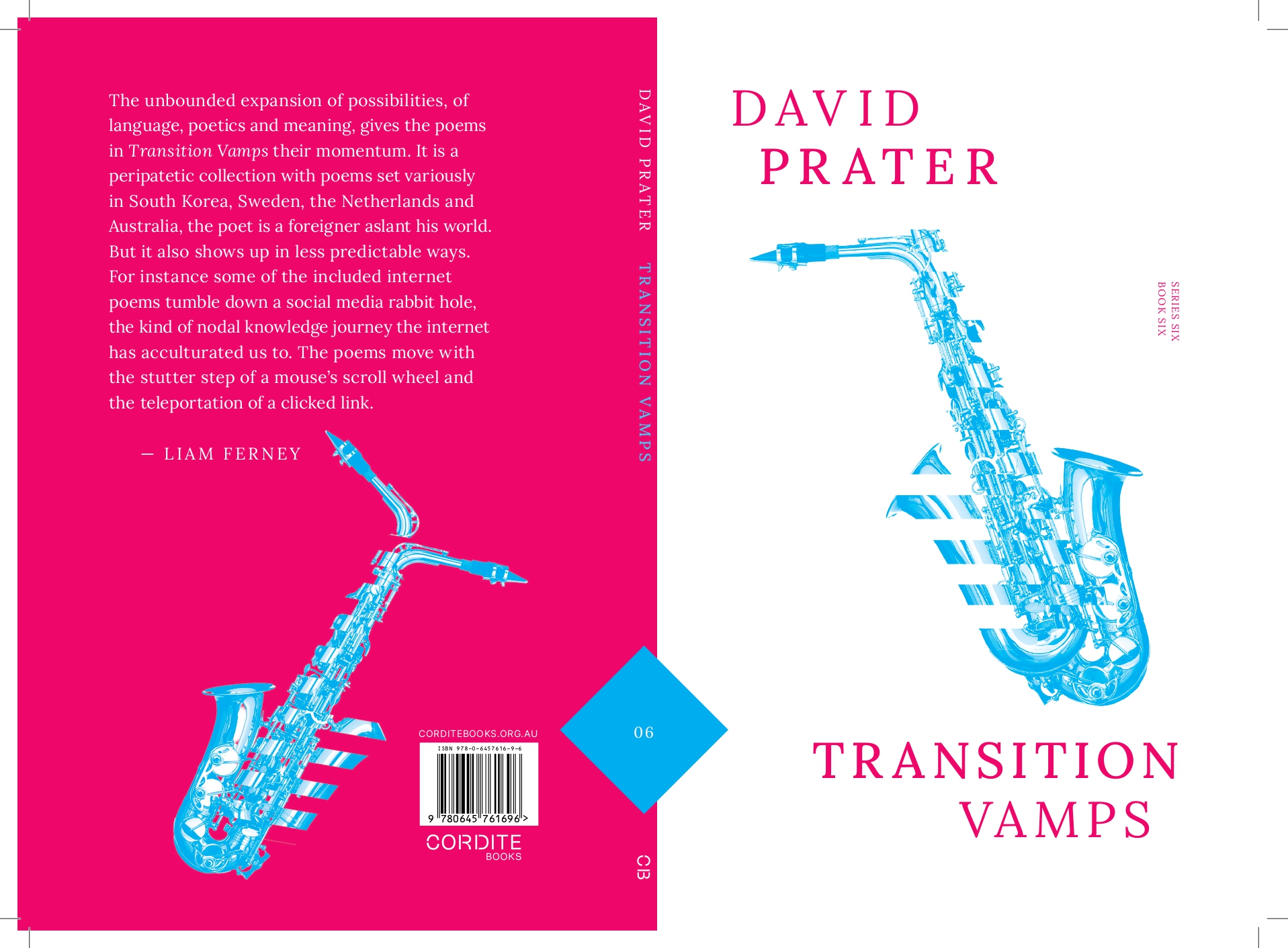
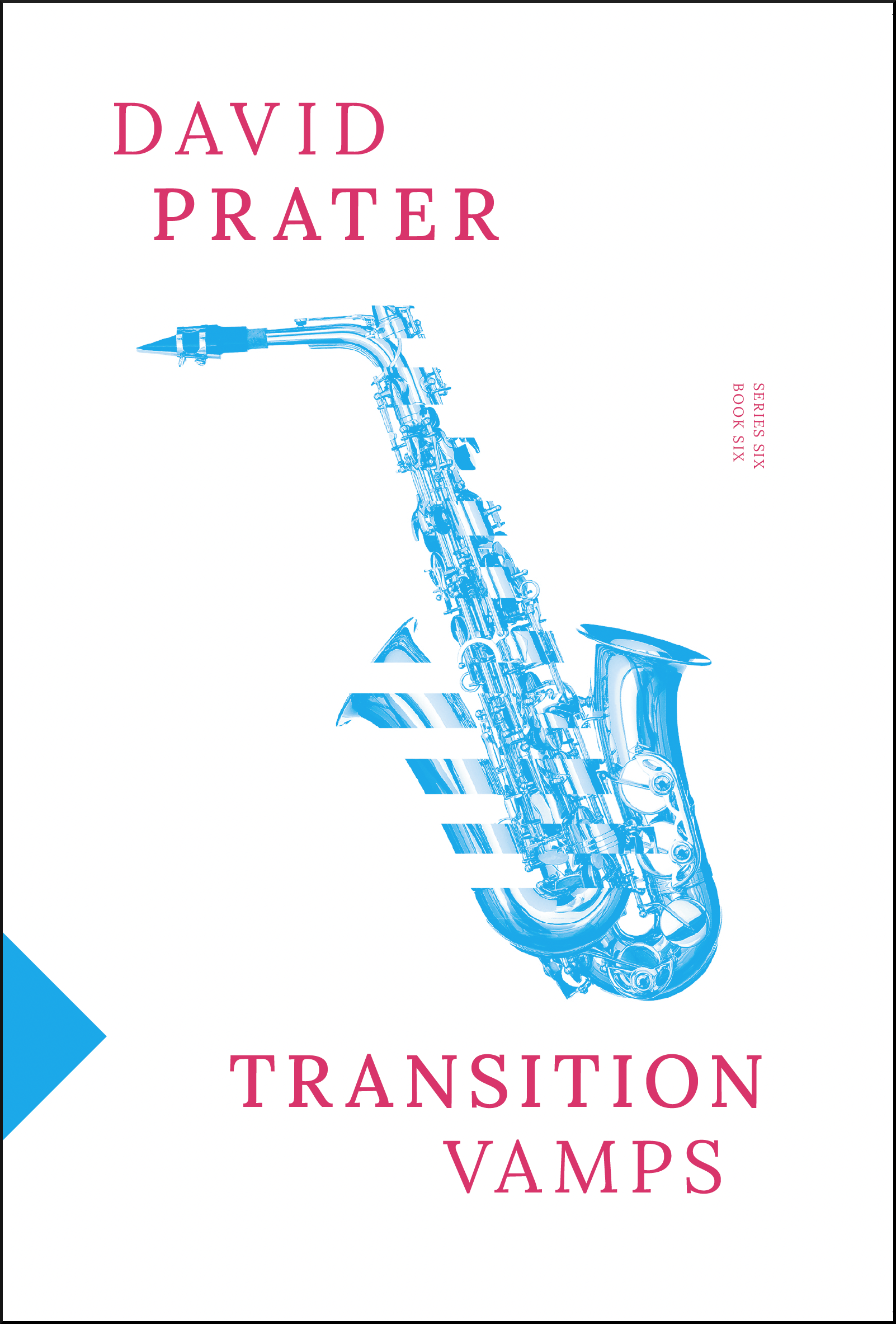
The unbounded expansion of possibilities, of language, poetics and meaning, gives the poems in Transition Vamps their momentum. It is a peripatetic collection with poems set variously in Korea, Sweden, the Netherlands and Australia. The poet is a foreigner aslant his world. But it also shows up in less predictable ways.
For instance internet poems, including ‘(On the tomb of) Ephrem Tamiru’, ‘and ‘Victor Garber Blooper Reel’, both of which chart journeys through YouTube comments on videos about, respectively, an Ethiopian pop star and a lead actor in the spy show Alias, tumble down a social media rabbit hole, the kind of nodal knowledge journey the internet has acculturated us to. The poems move with the stutter step of a mouse’s scroll wheel and the teleportation of a clicked link.
In ‘Kus’, a discursive poem à la mid-career John Ashbery, the searching is the desire to ‘really learn’ the Dutch language’s ‘beautiful word for a kiss’. We should, the poem argues, be able to know these words that are ‘not meant/ to live in a dictionary but in/the mouth’. There seems to be a yearning for this knowledge to be a kind of fixed tangible state, a game show prize you can hold in your hands.
Instead, language is ‘like a shiny/spaceship forever tumbling towards/ the kus.’ The line break is telling. Prater’s poetry is often tumbling towards something, in this case the kus, but, just as often, it is just tumbling towards. Maybe the best we can hope for is what Wendy James sang about: ‘I don’t want your car baby/ I want your ah!’







Pingback: Transition Vamps: The testimonial – Davey Dreamnation