Don’t we just love Guy Debord and those Situationists wandering Paris in the 1960s, mapless, unguided by more than drift, a theory of psychogeography, and minds open to the politics of spaces, and calling it all dérive: a lovely word if ever there was a lovely word; a missile word aimed at a flâneur; a word, an aperçu opening onto the possibilities of thinking political philosophy while walking when totally cooked.
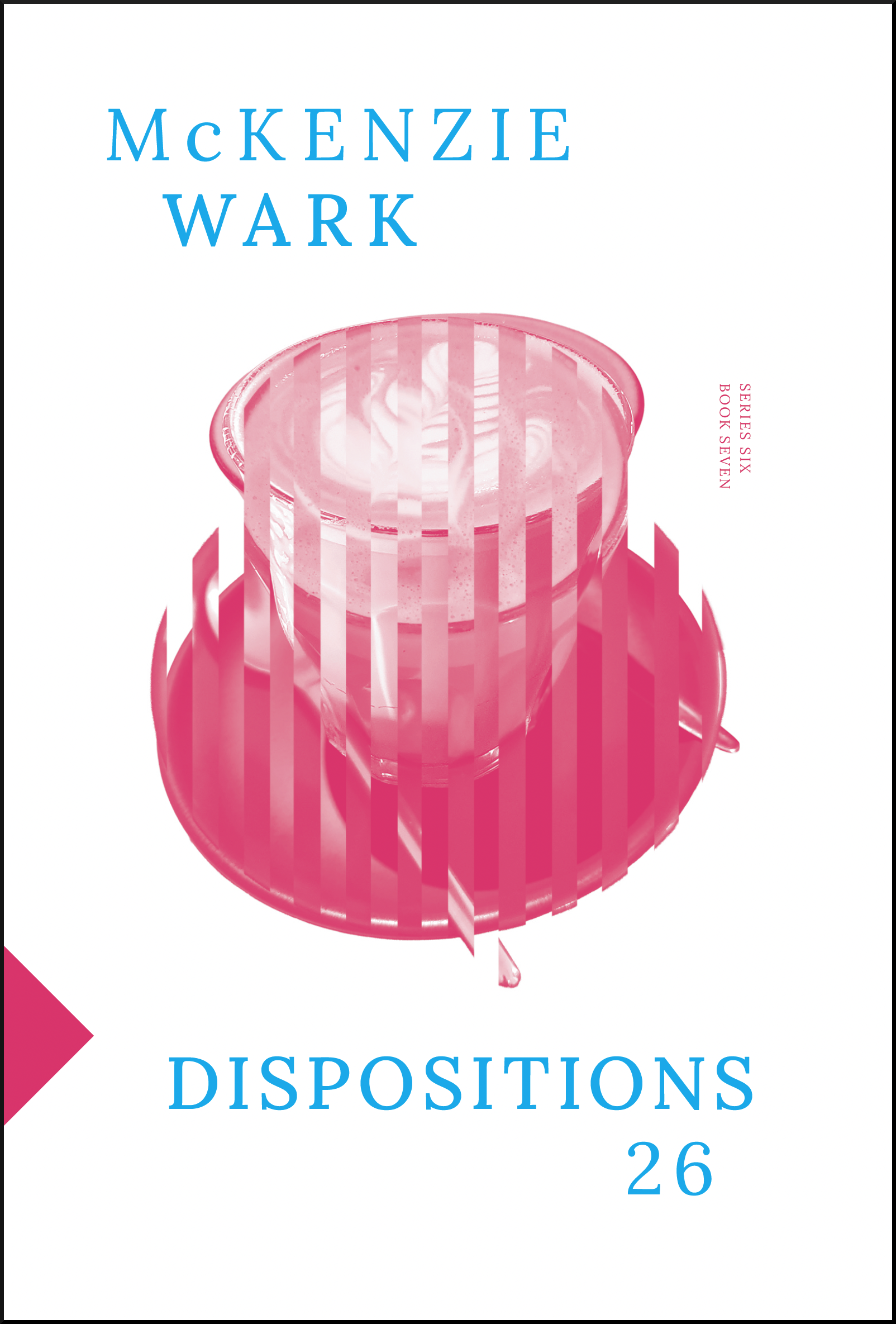
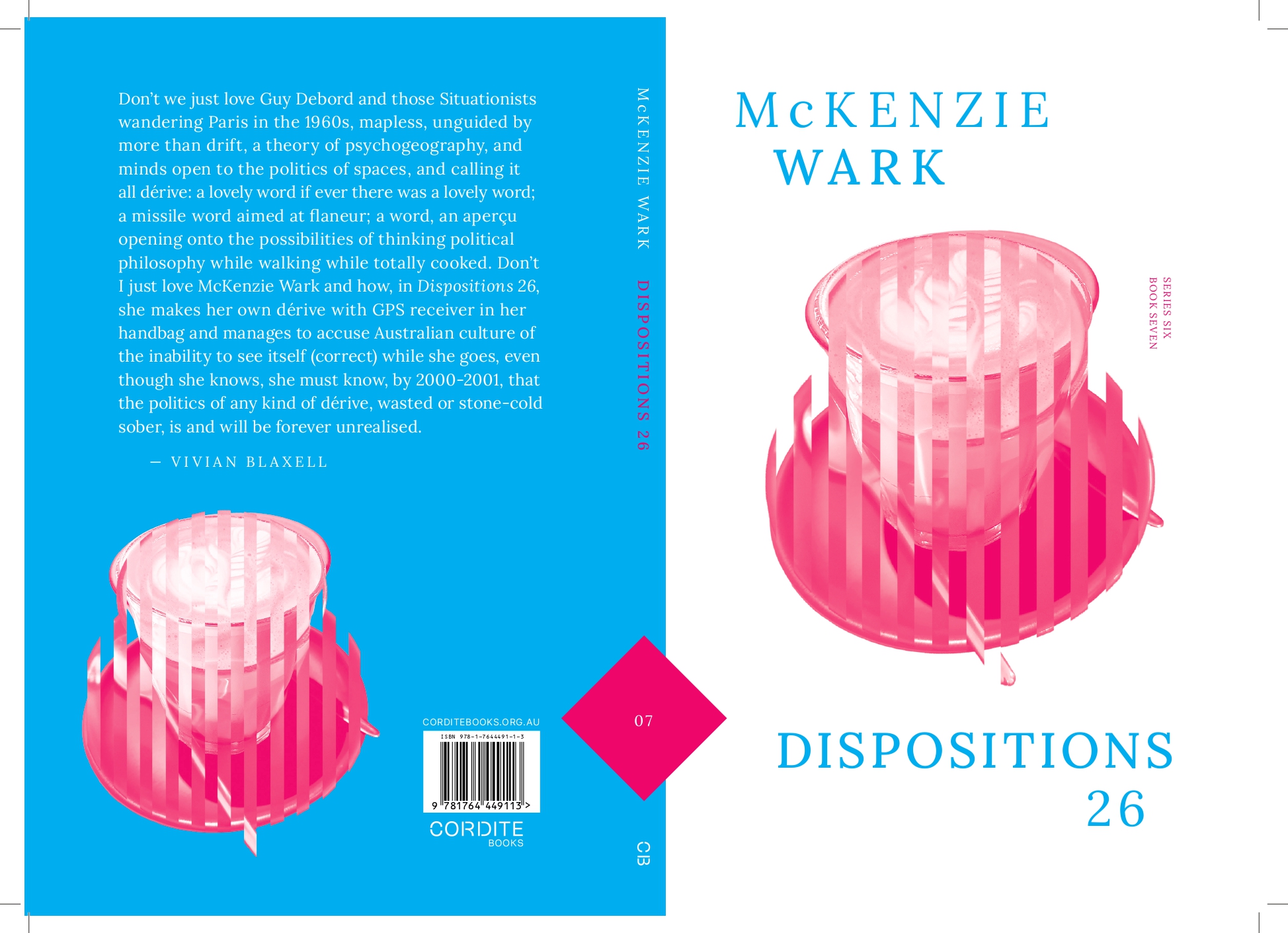
Don’t I just love McKenzie Wark and how, in Dispositions 26, she makes her own dérive with GPS receiver in her handbag and manages to accuse Australian culture of the inability to see itself (correct) while she goes, even though she knows, she must know, by 2000–2001, that the politics of any kind of dérive, wasted or stone-cold sober, is and will be forever unrealised. Not unrealised just because ‘All space is occupied by the enemy now,’ as Raoul Vaneigem put it in 1960-something; not unrealised just because the concept of positive hole and constructive destruction fell to the ancien régime conservationist reflexes of revolutionaries themselves; unrealised because of what the GPS unit in Wark’s 2000–2001 handbag augured: the diminishment (almost unto vanishment) of geographical space itself into tiny, thick digital spaces on the screens of 15 billion devices with active GPS chips and maps. Apps charged with AI so that you already know what the enemy wants you to know about the space as soon as, or before, you get there.
Talk about overdetermined. Talk about dérive over. And, please, go on, talk about how and why McKenzie Wark’s Dispositions 26 is of another time by now but is not a relic, not at all. Talk about how and why Dispositions 26 reads as entirely of our post-space times. I, myself, suspect operations of that transsexual witchery everybody would love and fear in equal measure if everybody knew about it. Girls like McKenzie Wark and me, we are good at timeless and spaceless, both. We are good at lasting, and what Wark does in Dispositions 26 that lasts and rings out true now without regard for the years is what she does with what she takes from the spaceless spaces she dérives: how she renders what she takes into poetry of an almost Homeric form, into songs almost Odyssean. Not that Dispositions 26 is always canting toward Penelope, though there is plenty of where-is-what-is-home in it.
What McKenzie Wark does in Dispositions 26 is rove as a new-landed immigrant through alien spaces and extemporise anchors for herself and for us from those spaces: political philosophy at N 40.74389° W 073.98708° and many other places; political economy and squirrels at N 40.71475° W 073.35218°; art all over the place; the new wife who is no Penelope here, there, everywhere; and there, there, there and there, ‘The shame that is waiting. The seed rotting, not sprouting. The body bottled up against itself, against its changes. Containing itself for an event that may not come to release it.’
Every spaceless space in Dispositions 26 is disposed to be thick with all things, even inequities being equal. In it, Wark is thick with transsexual. She is thick with jobless. She has eyes for the uncanny and an uncanny way of showing the uncanny. And yes, she is McKenzie Wark on dérive and thick with a kind of wisdom about why the enemy is winning and the dérive soon to be no more than an Instagram moment.