
Note
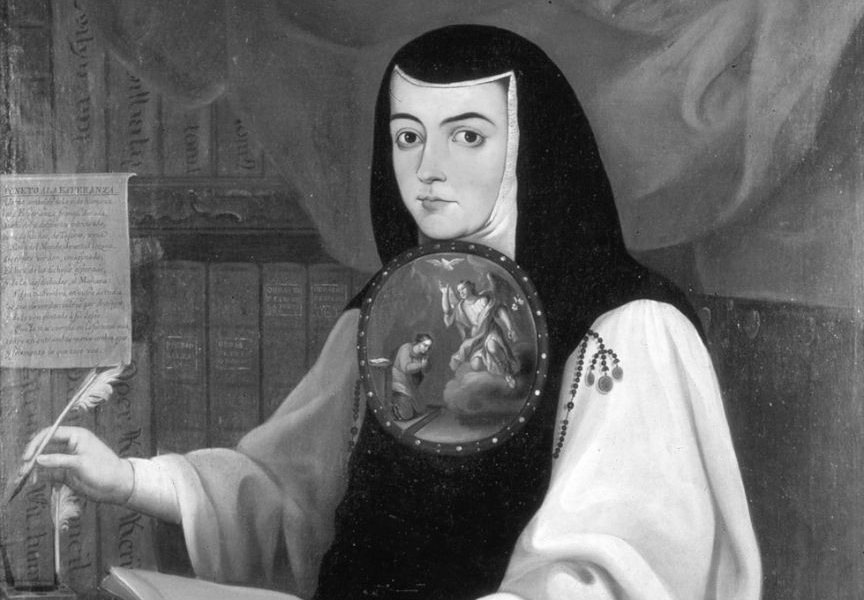
The following translations are excerpts from Sor Juana Inés de la Cruz’s magnum opus, Primero sueño (‘First Dream’, or ‘First I Dream’). Originally published in 1692 as part of Sor Juana’s second collection, Primero sueño is a definitive document of baroque Spanish poetics. Here I want to provide some introductory remarks about the Spanish baroque, and about the poem’s translation into English.
Baroque art abounds in conceits and counterfeits, in theatricality and obsessive sophistication. In poetry, verbal puns and elaborate metaphors are ubiquitous; they are designed to call attention to the fragile lines between reality and fantasy, beauty and ugliness, and faith and reason. In Spain, baroque poetics developed two alternative modes: the culteranismo of Luis de Góngora (1561-1627), infatuated with high rhetoric and labyrinthine syntax, and the conceptismo of Francisco de Quevedo (1580-1645), characterised by ingenious conceits (and not unlike John Donne). The former paints layers upon layers with verbal pyrotechnics, whereas the latter makes poetry a tool of metaphysical enquiry. In New Spain, Góngora was more influential, but Quevedo still had plenty of admirers.
Although she was writing on the other side of the Atlantic, in many ways Sor Juana’s poetry unites these two great tributaries of Spain’s baroque tradition. Like Góngora, hers is a rich materialism of juxtaposing, colourful solids and glitteringly deceptive appearances; chiaroscuro twists through strange, syntactical accretions in an effort to rival the artifice of nature itself. But Sor Juana channels Quevedo, too, in her satirical wit and in her moralistic tension, her keen awareness of human corruption and death.
But Primero sueño is philosophically much more ambitious than any other poem from the Spanish Golden Age. A highly personal essay on epistemology, the richly materialistic style certainly belongs to Góngora’s world of deceptive appearances, but the psychology seems to approach that of a more modern, even Faustian, scepticism. For Primero sueño expresses the failure of the human mind to grasp reality by means of purely intellectual activity. Thus, the highest ambitions of Renaissance humanism are finally seen as wholly vain; disillusion is the only subject matter left for poetry, until disillusion itself collapses, leaving nothing: “…es cadaver, es polvo, es sombra, es nada” (from Sonnet 145).
Finally, I should acknowledge that there are many translations of Primero sueño already available. Invariably, however, English versions are expunged of the corrections, hesitations, and real-time uncertainties that are characteristic of Sor Juana’s original poem, and of baroque poetics more broadly. In the Spanish, these many lexical eddies and whirlpools create compelling swirls of conviction and doubt, and a sense that we’re in the midst of a lively, electric cognition. In English, for reasons that I don’t have space to go into here, we tend to code such swirls as confusing, excessive, or unnecessary—which might be why so many translators elect to delete them. As ‘difficult’, ‘purple’, or ‘over-written’ as my translations may seem, then, I hope that they provide a sense of what it’s like to read Primero sueño in Spanish.







