
BOOK REVIEWS
Michael Brown Reviews Paul Hardacre
If one name stands out as a hero and influence among the present generation of Australian poets it's Michael Dransfield. B. R. Dionysius has dedicated a poem to him. Jayne Fenton Keane has penned an adequate parody of one of his most recognisable works and Jaya Savige claims that discovering Dransfield's work prompted him to pursue writing instead of law. There is also John Kinsella's recent retrospective of Dransfield's work. However, Paul Hardacre in his first volume The Year Nothing, is perhaps closest not only in style but also in intent.
Rob Walker Reviews Tony Page
Writing a book of poems about abstract scientific theories is a high-wire act. The danger is that those who comprehend the science may not appreciate the poetry and those who dig the poems may not comprehend the science. Writing a review on this little gem was somewhat daunting, too. To begin with, a succinct review forming an introduction to the work has already been written by one Phillip Adams, whose intellect and eloquence I admire greatly.
Diana Young Reviews Sean M. Whelan
In reading Sean Whelan's Love is the New Hate, I was invited on a journey into the hinterlands of evasive emotion, decorated by the wreckage of cryptic personal revelations. Whelan's ten poems combine a strong narrative orientation with a casual conversational cadence to pull us into his native terrain.
Maria Christoforatos Reviews Jill Jones
As I sat reading Struggle and Radiance in my local laundromat and occasionally looked out at the pub or the tendrils of exhaust fumes across the road, I found there was plenty that was unapologetically radiant in these poems and the word ‘struggle' in the title suggested an unnecessary weight or polarity to this collection.
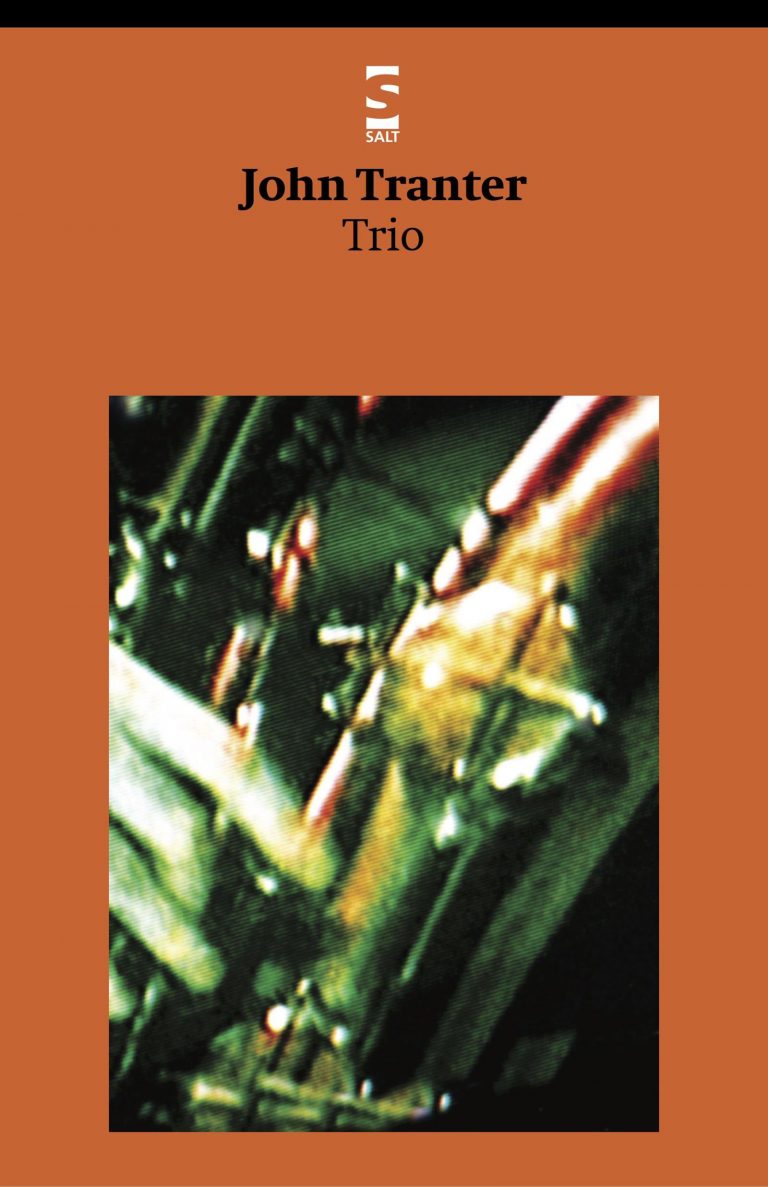
John De Laine Reviews John Tranter
Salt Publishing's decision to republish three 1970s collections by John Tranter under the title Trio nicely bookends the army of books no doubt already occupying the home library shelves of his most ardent and serious fans.
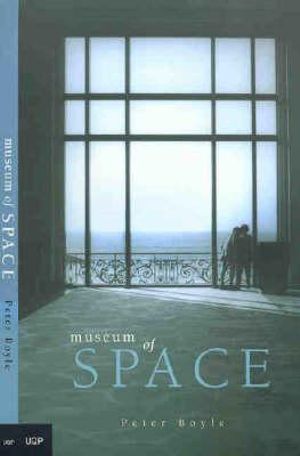
Bev Braune Reviews Peter Boyle
Peter Boyle strikes me as a poet who likes the air, much as Peter Minter likes water; Robert Adamson, leaves; Jordie Albiston, defined/confined spaces; John Tranter, lines or, rather, the lineage of the cursive. Boyle most reminds me of Robert Adamson with his gentle, probing style, his yearning approach to all that should be desirable–an understanding of ourselves in space and time, wherein we point all our limitations.
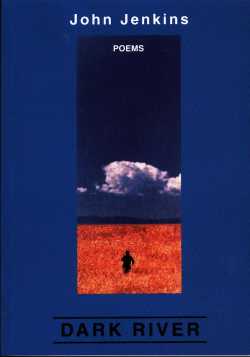
Scott Thornton Reviews John Jenkins
In John Jenkins' eighth collection, Dark River, the question he asks the reader is, 'Are we apes or cobalt clouds?' Throughout the collection, a poetic narrator directs the reader towards a continual reassessment of science and aesthetics.
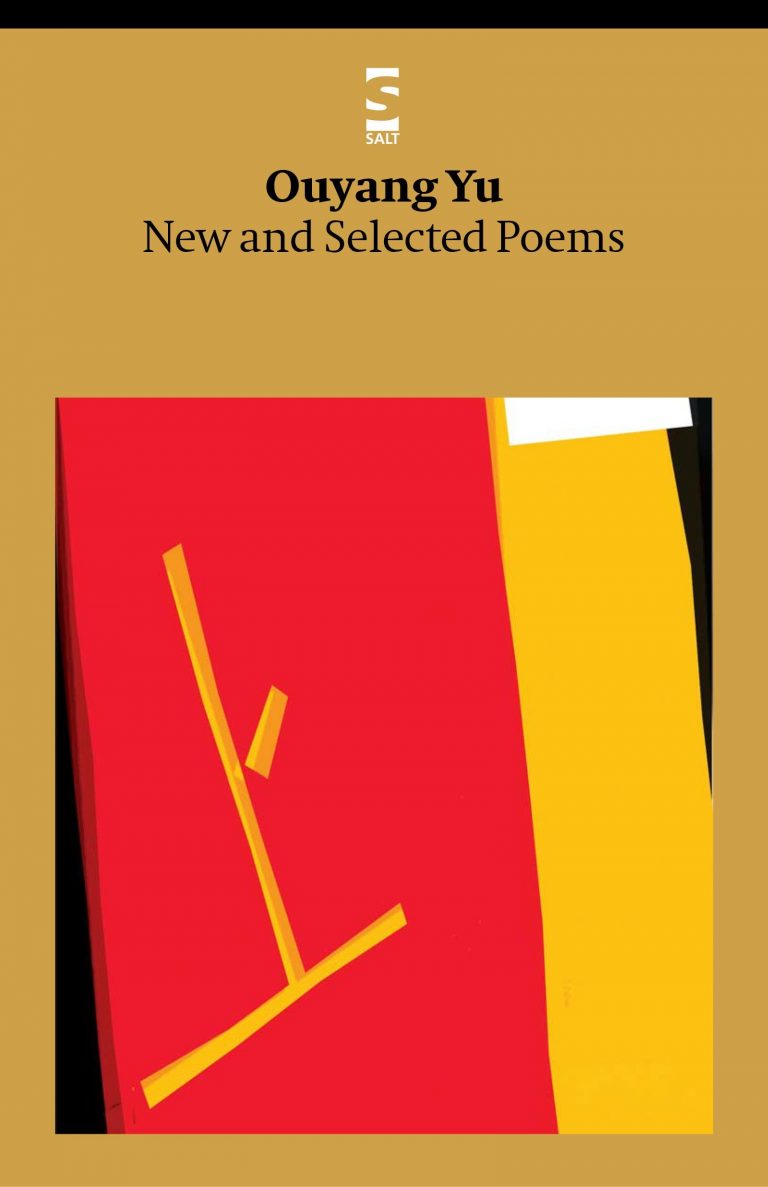
Ali Alizadeh Reviews Ouyang Yu
´Multiculturalism', when all has been said and (often very little) has been done about it, remains a difficult, even paradoxical, idea. It is an English-language term invented by, and used for the purposes of, the dominant Anglo-Celtic culture; yet it supposedly represents the reality of being from the ´minor' cultures that, at least in Australia, do not have English as a first language.
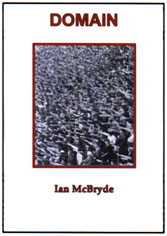
Ali Alizadeh Reviews Ian McBryde
In the media release for Ian McBryde's latest collection, Domain, Peter Porter states that World War II and the Holocaust — the content of McBryde's collection — have been “subjects defiant of poetry”. Here, I think, Porter is trying to make a claim for this collection's uniqueness.
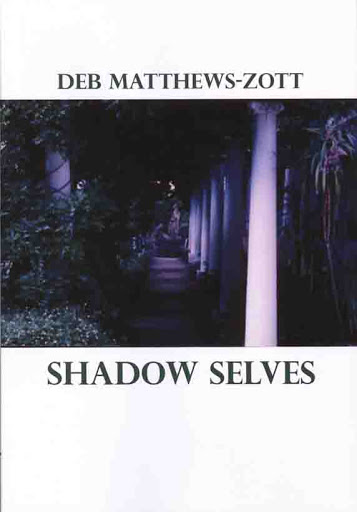
Rob Walker Reviews Deb Matthews-Zott
Poetry about erotic desire is fraught with perils. Just look at some of the worst on thousands of teen websites and you'll get some idea of just how bad it can get! Contrast this with Shadow Selves, Deb Matthews-Zott's latest work, and the difference is striking, showing a sophistication that welds the physical to the intellectual. She achieves all this without resorting to anatomical diatribe. But it's still hot.
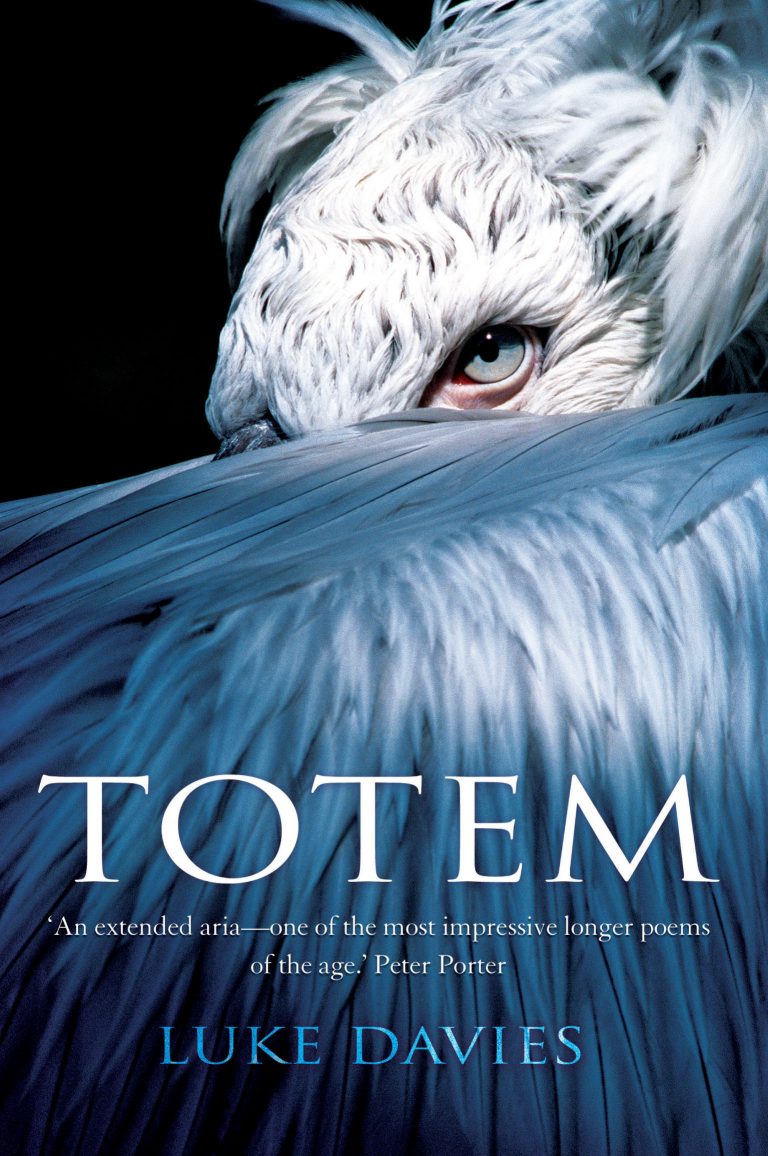
Bev Braune Reviews Luke Davies
The efficacy and strength of Luke Davies' Totem lie in its drawing on a long familiar tradition of mythological narratives as a vehicle for romantic verse-tellers – from Publius Ovidius Naso (known to us as Ovid), to Giovanni Boccaccio, to John Milton.
James Stuart Reviews Luke Davies
I'll let you in on a secret: I think Luke Davies is in love. OK. So it's not much of a secret. Still, while descriptions on the jacket refer to it in a variety of glowing terms (‘A sustained aria' — Peter Porter; ‘the great Australian long poem' — Judith Beveridge) what they basically elide is that ‘Totem Poem', and its 40 companion poems are pretty much all about love. And so we pass the microphone to Davies.
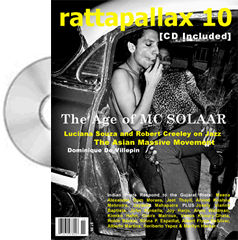
Moses Iten Reviews rattapallax 10
I have to admit, I picked up issue 10 of rattapallax for 'The Age of MC SOLAAR' cover story. Although my French is still very limited, I have had quite a few tracks by the Senegal-born, Paris-bred, hip-hop superstar on high rotation for several years. Undoubtedly, his flow alone is dope enough for heads of any language.
Rob Walker Reviews Les Wicks
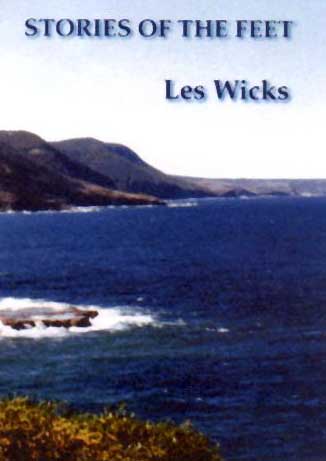
Iconic Japanese film-maker Akira Kurosawa (director of The Seven Samurai (1954), remade by Hollywood as The Magnificent Seven; and Yojimbo (1961), remade (or is that ripped off?) as A Fistful of Dollars) is frequently feted as an artist who elevates the common man to hero status in his phenomenal catalogue of work. Reading the work in Stories of the feet made me wonder if Les Wicks is an Australian poetic equivalent of Kurosawa.
Bev Braune Reviews Pam Brown
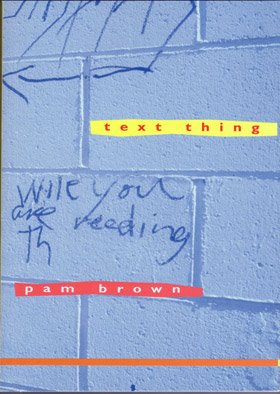
My topic is local. The poems rarely leave whatever street I'm on. They are as mobile and as mutable as my daily life. (from Pam Brown's Statements on poetics) [1] The art of looking for the text, the thing it's in and re-thinking it, is Pam Brown's forte. In reading this collection, I find myself thinking of Brown's development. She is a poet who reads, travels, observes and re-thinks her own backyard.
Bev Braune Reviews Melissa Ashley
Melissa Ashley brings us a collection of stories considering realities, mythology and personal experience. While a veneer of the strange wraps her images, the translucence of their reality is distinctly prominent. This is a book about definition, about who defines what and how. The poems in Ashley's first volume of poetry are seriously concerned with corporeal actualities and female self-definition.
DJ Huppatz Reviews No Other City: The Ethos Anthology of Urban Poetry
At Changi Airport's arrivals hall, you're greeted by the sound of birds, which is quite disconcerting at 2am. This simulated birdsong is symptomatic of the city-state's attitude to nature. For Singapore, it seems, nature is dangerous and unpredictable, better replaced with more predictable, more aesthetically pleasing technologies. Former Prime Minister Lee Kwan Yew once famously asserted that the greatest invention of the 20th century was the air conditioner. Thus it is more than just an urban condition that is constructed in Singapore, it is an aesthetic condition that incorporates all aspects of life.
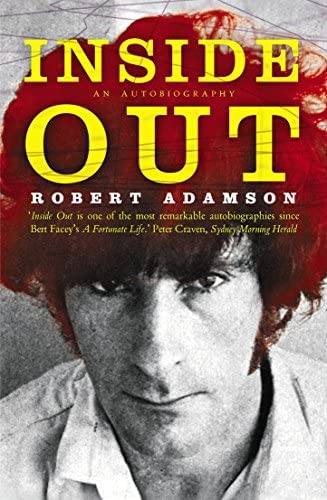
James Stuart Reviews Robert Adamson
From his earliest involvement, Robert Adamson has been an iconic figure for contemporary Australian poetry, both as a “post-symbolist”, lyrical poet, and as an editor and publisher. His achievements are testament to this, whether one is reflecting upon his 17 odd collections of poetry, and the consequent awards, or his various engagements on ventures such as the editorship of New Poetry and the founding of Paperbark Press.
Brentley Frazer Reviews MTC Cronin
WOW! I had to read beautiful, unfinished 16 times before I had enough courage to even begin thinking about reviewing it. Cronin wields language like an ax with scented blade, its hits your brain with a squishy sounding clunk but it's so pretty you want to make out with it.
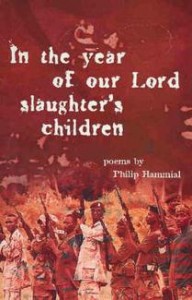
Adam Aitken Reviews Philip Hammial
Who is Philip Hammial? If you read Hammial's 16th book of poems, it will strike you as surprisingly biographical without sounding too auto-biographical – after all it's Philip Hammial poetry. Who is Philip Hammial, the poet? What's his world?
Matt Hetherington Reviews Dan Disney
It's reasonable to suggest that we live in somewhat Tragicomic times. A well-known satirist (whose name I forget) recently complained of being completely unable to mock the American government, since those running the country were already effectively satirising themselves by saying and doing things more absurd and laughable than anything he could come up with.

Komninos Zervos Reviews Papertiger #3
The third CD-ROM of poetry has been released by Papertiger Media and yet again presents the work of many of Australia's finest contemporary poets. As well, the Editors have included an eclectic array of international contributors from Canada, Finland, the UK, the USA and Australasia. More interestingly it is the expanded use of the new digital format of this collection i.e. the CD-ROM.
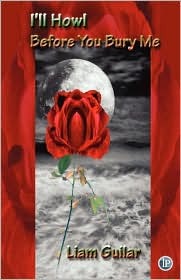
Scott Thouard Reviews Liam Guilar
I'll Howl Before You Bury Me is a title that suggests an emotional reprisal. The poems in this collection protest the repressing of individual vitality in favour of congenial surrender to the beige touchstones of contemporary life.
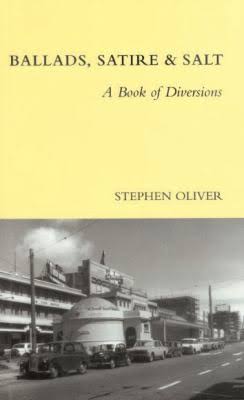
Kristin Hannaford Reviews Stephen Oliver
The blurb on the back cover cites this as a “challenging miscellany”. What do you make of that? A mixed bag? Poetries that don't fit? Odd socks and whimsy? Well, after puzzling over the collection for a few weeks, I'd say yes to all of the above.'







