
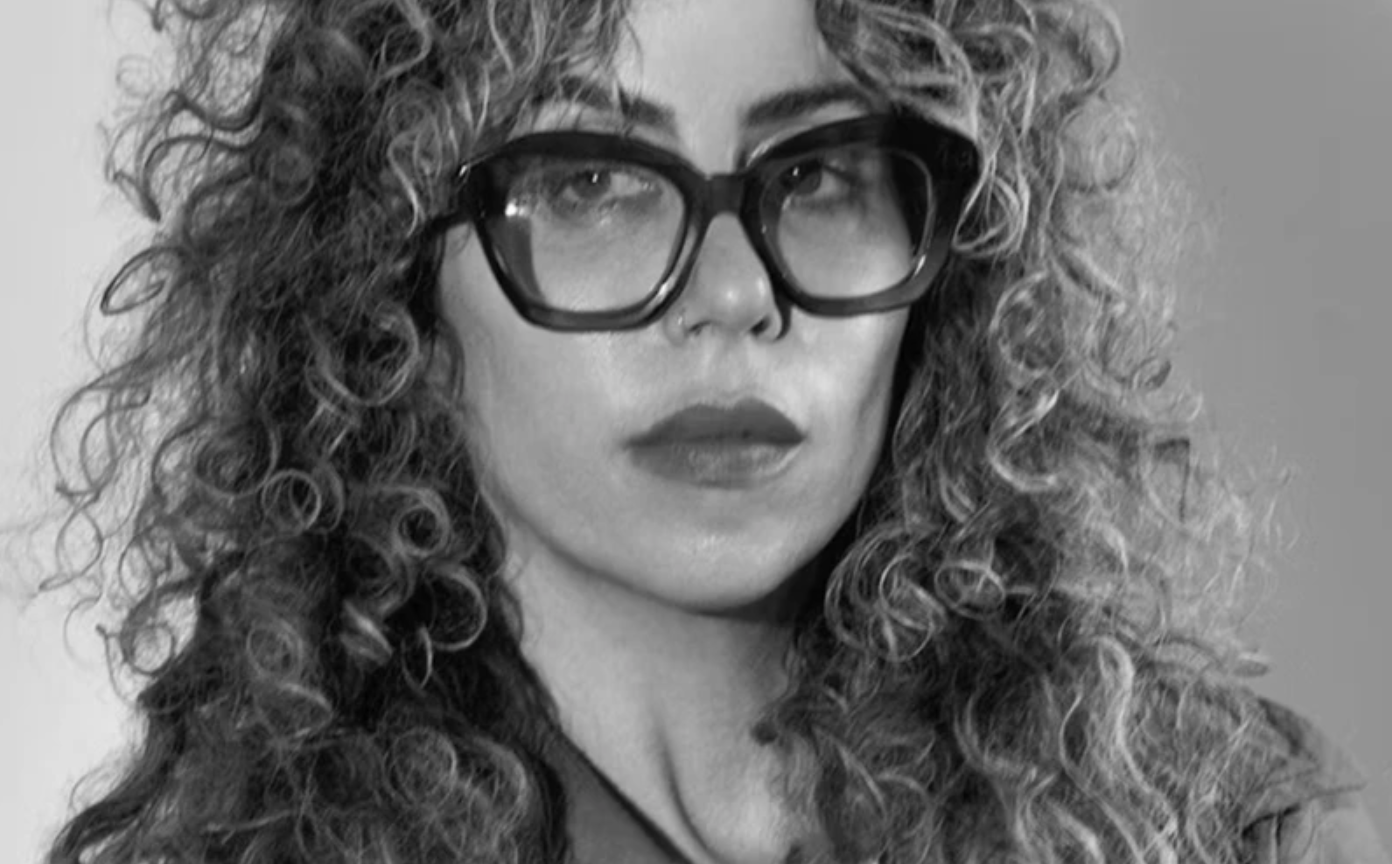
I was first taken with Ariana Reines’s poetry during the Melbourne pandemic lockdowns – one of the longest lockdowns globally. I was part of an online poetry reading group reading modern and contemporary American poetry, including Reines. I wasn’t reading much otherwise, but A Sand Book (2019, Tin House Books) was a comforting object with a strong aura on my bedside table. Reines had recently started an online Invisible College and was teaching on the work of Rainer Maria Rilke. The time difference was difficult so I couldn’t often attend, but it was one of the signs of life that felt precious to me at the time.
Reines’s voice has been vital for me and many others in the context of a public discourse that lately feels in need of revival. Reines practices the art of poetry, using the power of the voice and the technology of the book, which, even with her huge success within it, seems completely undomesticated by the confines of the literary market as well as the increasing sadism of the academy.
The following interview between myself and Reines, was conducted during the Q&A section after her lecture ‘The Time of Spectacle Will Pass’, on the August 14, 2025. In the lecture Reines spoke of the process of writing The Rose (Graywolf Press, 2025), Wave of Blood (Divided Publishing, 2024), and the mystical experience recorded in her 2019 publication, A Sand Book. The recording of this lecture is available via The Melbourne School of Literature website.
In the lecture Reines somehow managed to make an online silent PowerPoint presentation feel like a spiritual experience. As part of the lecture, she had sent through slides including the final part of A Sand Book, activating white text on a black background, what the sun ‘spoke to her’, one day, while rehearsing, a physically demanding performance: ‘ANALOGY IS THE STRUCTURING PRINCIPLE OF THE UNIVERSE’, ‘THE SUFFERING OF WOMAN IS TRUE STORY OF THE UNIVERSE’, ‘WE HAVE TO UNDERSTAND OURSELVES AT ALL COSTS/ NATURE EXTENDS FROM US/ NATURE MIRRORS US…’. I pressed through the slides at a slow pace, following her instruction. Sitting silently on a Zoom call slowly reading these phrases, with the MSL committee and a group of students felt strangely radical and embodied.
Reines’s lecture reminded me that I was a writer and afterwards a friend messaged me saying that “watching the lecture made her feel like she could be more of herself.” In the following interview, Reines speaks of the importance of countering the stereotype of the artist who destroys themselves and the artist who wants to destroy the world.
Eva Birch: Let’s return to what you were saying about artists destroying themselves. This has been such a cliché, I guess, at this point, but it’s been a very common way for an artist to exist and to make work and to die – either by drug overdose or by different means. They suffer until the limit point of death. I was really interested in what you were saying about how this time we live in is no longer the time to do that anymore. I was wondering if you could expand on that a bit more.
Ariana Reines: I don’t mean this prescriptively. It was something that I felt was a realisation for myself. If you want to destroy yourself – anyone reading or hearing this – you like all human beings are endowed with divine free will. But I would really prefer that you didn’t destroy yourself.
I think there is always going to be a sacrificial element to artmaking and to the artistic temperament. There’s a way in which, if we’re really doing it, we are facing the limits of our own minds and the limits of our own bodies. We’re facing the threat of our own destruction when we create, because it’s also a confrontation with the abyss.
I have a very, pathetically corny, traditional artist personality. I’m melodramatic, I’m very moody – hating myself and feeling unworthy of existence is a very old habit for me. I forget what it is in the Enneagram – this ‘artistic’ personality type, but it’s embarrassing. It definitely is no guarantee of great art.
I sensed, back in my late twenties – probably when I was getting close to twenty-seven, the Saturn return time – that I was nearing the limit. I felt the pull of that trope of early death, that idea of artistic precocity and achievement crowned by death.
I’m from Salem, Massachusetts – Sylvia Plath, Anne Sexton, the witches, all of these way overdetermined, intense, brilliant, tragic women. It’s heavy and somewhat exhausting – I love them all, identify with them, but like, I had to make a generational decision. I used to be told by older women such incredibly negative things. I won’t say her name, but a very famous, very beloved writer once said to me when I was about to publish my first book, “The only person I know who was as brilliant as you at your age was dead of a heroin overdose by twenty-nine.” And I thought, Jesus, that’s a really not-good thing to say. To a young woman who admires you! To anyone! Nobody needs to hear that.
But it was supposed to be a compliment – like, ‘You’re so great you should be dead.’ And I started to feel that this was actually a cultural program, a completely negative cultural program designed to make creative people feel like they shouldn’t exist, and that of course this trope of self-destructive genius had infected the woman I admired too.
Creative people already have a hard enough time, because they tend to be quite sensitive, quite obsessive, quite passionate. They often have to come through extraordinary personal challenges and struggles in order not only to complete their work but to bring it to the public in a way that’s meaningful enough for people to connect to it. That actually takes a huge amount of selflessness. It’s weirdly the opposite of egotism – you could hate yourself and still need to deliver the work. Ultimately, the deeper you get into it, the less it is about you even if the work seems to like, literally be ‘about’ you.
I started to think, ‘This is a psyop.’ The idea that artists should die – that the better they are, the more dead they should be – I think that’s a cultural lie. It has to do with our culture’s intolerance for human life and creativity itself. We’re uncomfortable with those things. We’re okay with them if they’re happening to someone else. We can pedestal them. It’s okay for Beyoncé, maybe, but not for us. It’s very peculiar, this notion. Maybe it’s different in Australia, but in America – where the rock star paradigm originated – it’s deeply ingrained. I think it’s a negative cultural program, a lie. I think art and life are intrinsically connected, and specifically, caring about life is a really important contemporary issue.
We’re surrounded by death. Just look around. Thinking seriously about what art demands – the idea that there is more to being and existence than what we’ve been told – that’s crucial. If we don’t bear witness to it, if we don’t bring it through, it won’t exist on Earth.
If what comes through you can’t come through, if you can’t withstand it, then you can’t understand it. Rilke says something in the Duino Elegies about the bow and the arrow – the string that endures the charge of shooting the arrow. That ‘quivering, endures’. If we can’t learn to endure the shock and the sacrifice that come with creativity, we’re taking the side of a death-obsessed culture.
I made this decision for my own sake. I needed examples of artists – in my case, women artists – from fucked-up families who nevertheless didn’t wreck themselves. I want to see more of every kind of artist, of every gender and background, not wrecking themselves.
I guess what I haven’t talked about is this other trope, of the frustrated artist who destroys the world. The Hitler figure. Where a kind of frustrated will to self-express becomes a kind of fascistic gesangkunstwerk – the total creation, aesthetic and moral, of death cults…
EB: Just on Rilke – I wanted to ask you about him. He quite famously was going to start psychoanalysis but said he thought it would ruin his art, and then he passed away quite young. Do you think if he’d entered psychoanalysis, he would have lived a longer life? Or would he have stopped making art?
AR: Wow, what an amazing question. I don’t want to piss off the psychoanalysts – I feel like I already did last year. It’s a long story, but I pissed off some analysts…
I love psychoanalysis. In a lot of ways, Rilke’s poetics lends itself beautifully to psychoanalytic readings. There’s something Jungian about him. But it’s hard. From my own experience, I know artists who are in psychoanalysis, and it seems to help them very much – as artists, as people. It connects them to their dreams, keeps them from killing themselves, gives them something to do.
Do I think it would have saved Rilke’s life? I don’t think Rilke needed psychoanalysis. I don’t think his unconscious was blocked. I think he had total access to every region of his consciousness – or at least his poetry did. Even if Rilke the man, in his contingent relationships and in the way war and devastation and political chaos affected him, didn’t have constant access to those realms – his poetry did. You can feel it when you read it.







