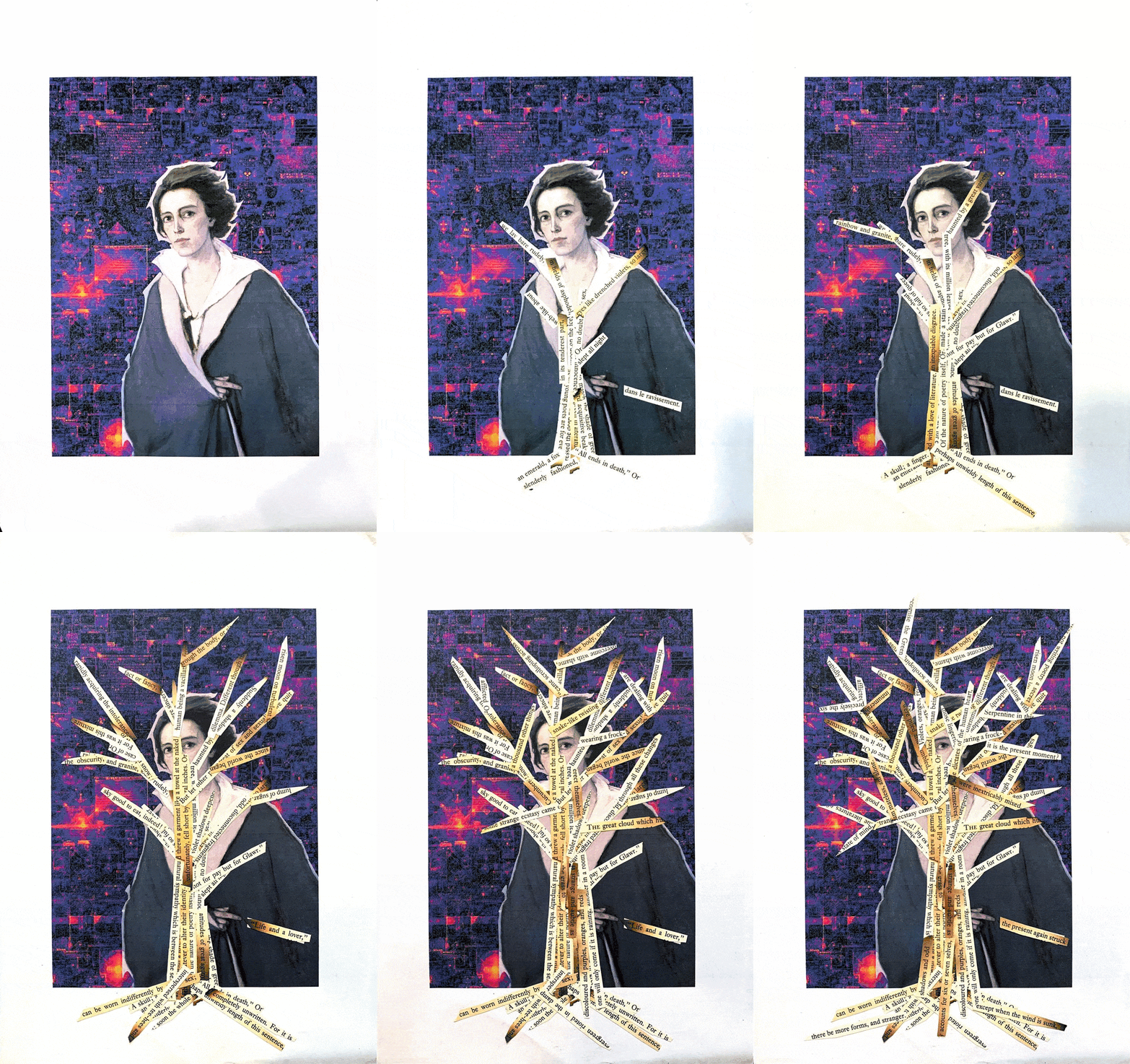
In Fitch’s craft, I recognise artists’ proclivity to pick at ourselves, to prune. To comb through the peat that has not quite decayed or regenerated, and perhaps never will. To recognise ourselves remixed into different forms or enmeshed in nature. Show me a mirror and I’m indifferent, show me a swamp or a mycelia network and I’ll say, “That’s me”.
Or naturally deals with the ‘either/or’ of gender and ego, and at times, also points to the ‘neither/nor’. It’s hard to name who we are, but sometimes easier to name who we are not.
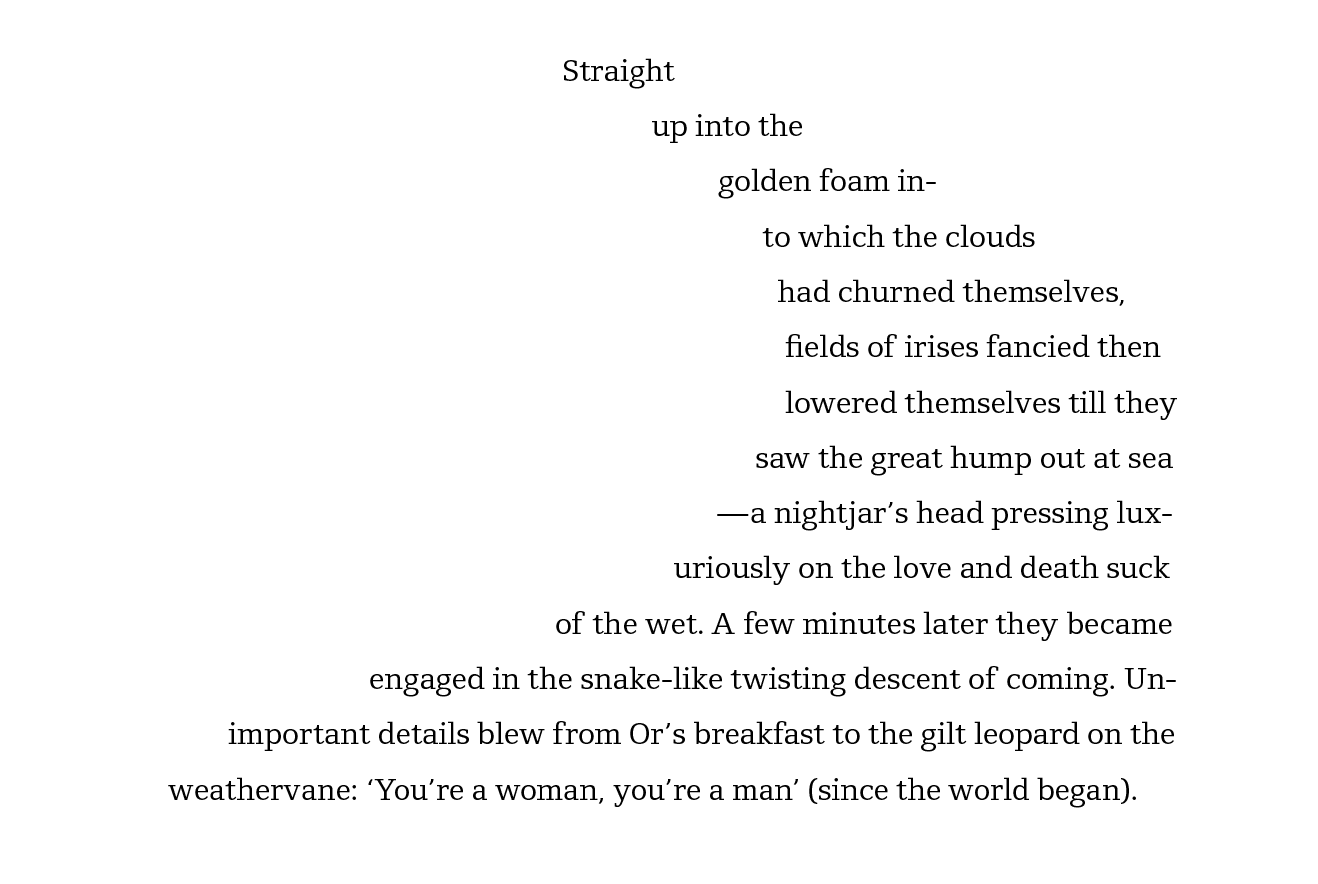
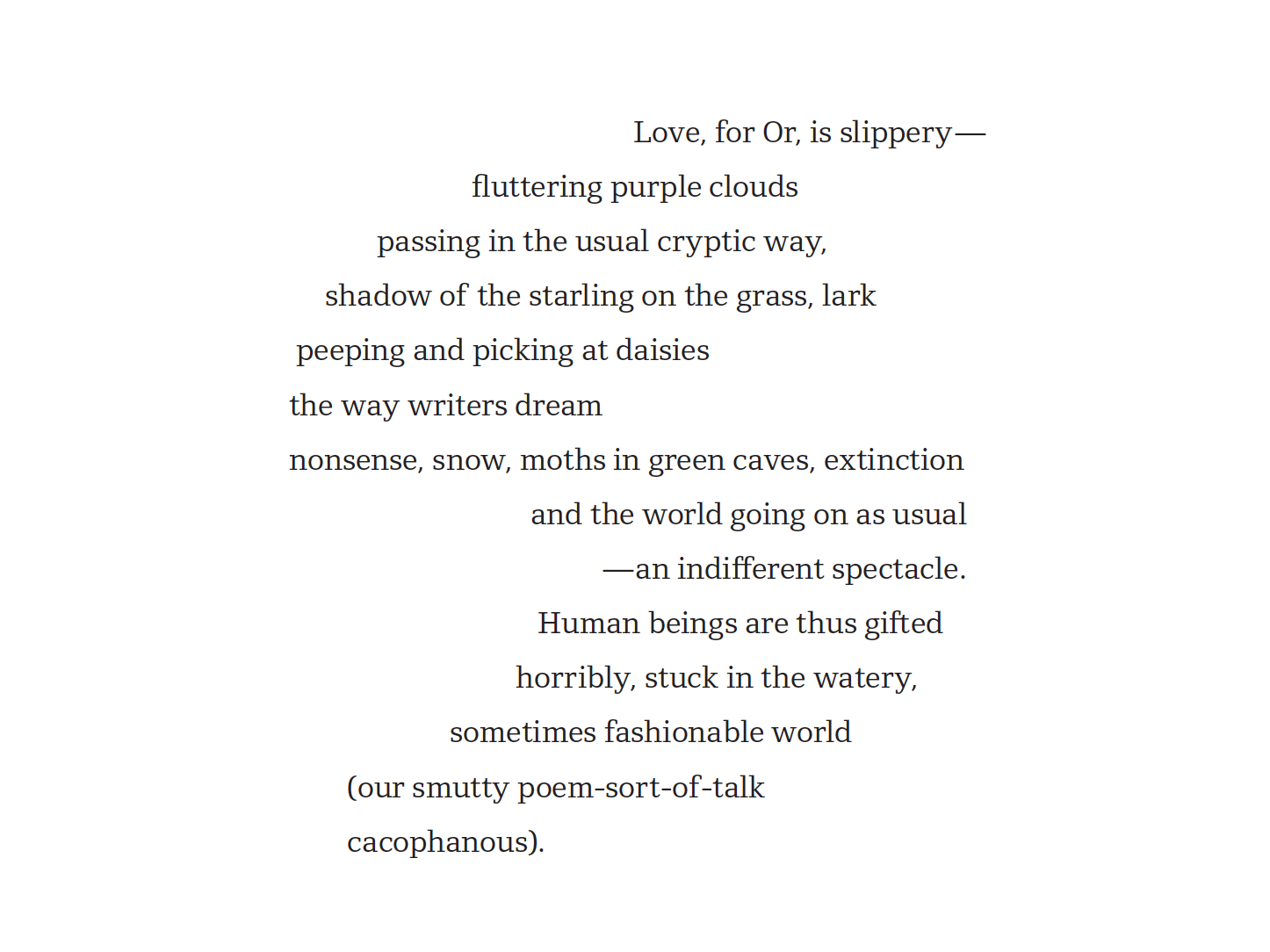
An antithesis to the parental warning, “If you pull a face and the wind changes, it’ll get stuck like that,” Or sticks and unhinges, pastes over itself in thick layers gnarled like bark, gluey like sap. The tree is grounded but ever in flux, always changing its faces, endlessly redrafting.
In the same way, Fitch’s use of collage feels earthen – scrappier and more ‘lived in’ than text that finds itself already arranged, already defined in its constellation.
The organic ecosystems in this book are tinged with greens. Sludgy, brilliant and alive. This is queer. Don’t ask me why. Not green like the lawn of a white picket-fenced home, false safety promised by the nuclear family. Green like olo, the unseeable colour. Like hybridised grapes or greengage plums – purple flavours in green flesh. Like flubber goo or toxic waste barrels – friend and foe, respectively. Like algae, both at once. Like discoloured potatoes, like Baudelaire’s hair (or mine right now), and of course, like Kermit the Frog.
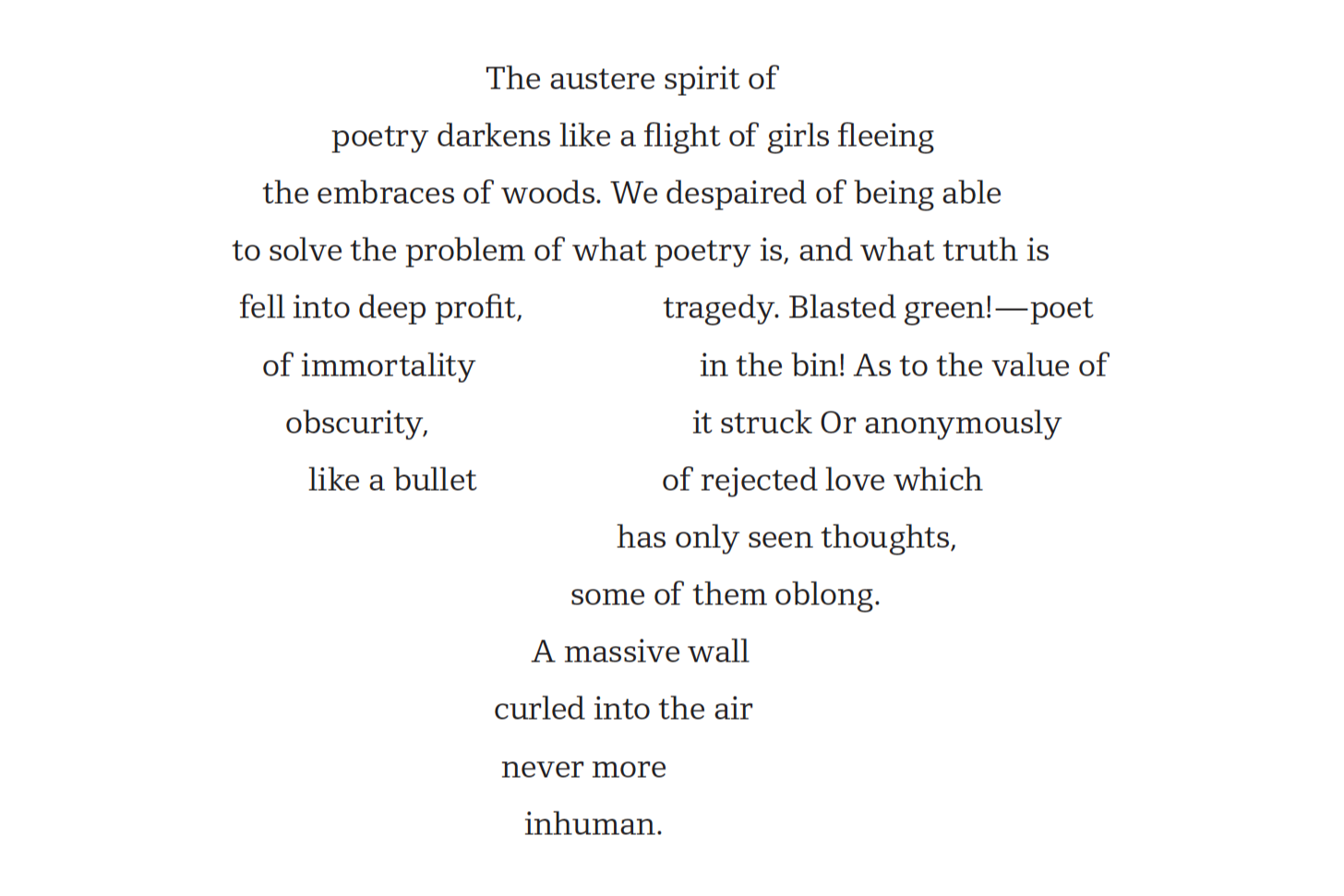
In Or, the sky is an ocean, a flying fox is a midnight fish, the gender binary of man or woman is as arbitrary as bat or wombat. As in Jack Halberstam’s The Queer Art of Failure, queerness is both in the memory and in its forgetting. The fragments of Or allow the reader to “rest a while in the weird but hopeful temporal space of the lost, the ephemeral”.
Queer writers, and marginalised writers in general, often experience pressure to write about identity in a didactic ‘101 explainer’ style. Poetry as a genre, in its abstraction, thankfully tends to resist this, and Fitch’s poetry especially so. Their creative reach spans peaks, valleys and creamy middles, beyond identity as a fixed place or political designation. This is queer writing for those who want something to chew on, who love an intertextual spiderweb, who sway awkwardly in the wind, for those transfixed by fire.
In Archer Magazine, Marina Deller explores non-binary identities in literature, discussing metaphors of the non-binary body as an (art)efact, a stray cat, an ocean, a seed and finally, as anything and everything. Like Fitch’s ‘Or Tree’, these metaphoric bodies are living and expansive, monumental and tender. More Gaian than human (compliment).
The queer body weathers the violence of its existence – a life fragmented, stanzas burned sapphically, a roiling storm, a dance led by… who even knows?
As I read this book, I thought of RAWSHOCK, Fitch’s first full-length collection, which maps the myth of Orpheus – another Or, leading the way – in the shape of inkblots, supposed ciphers of the mind’s disturbances. Similarly, Or sculpts the body and mythologises gender, with understoreys in place of the underworld. The concrete elements in Or are sometimes rigid, like a tree trunk or an arrow or a masculinity that doesn’t fit, and at other times flow like leaves or questions.
Through the concrete, plant life grows and wilts. The tree becomes. And Or.