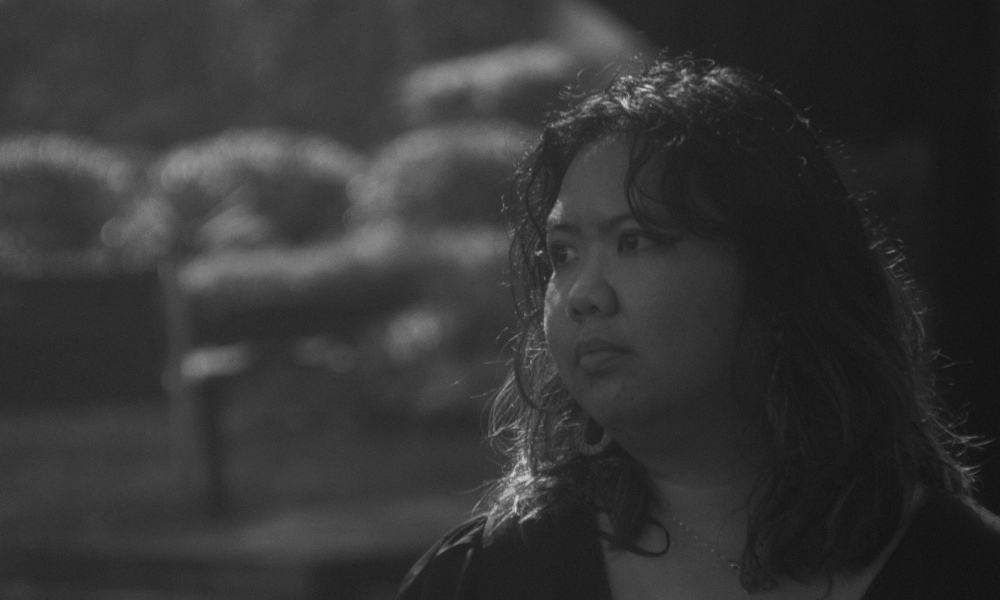
The author would like to acknowledge the community of contributors in Brave New Words volume 2, edited by Angeli Lacson, and their words, some of which intersect with this essay.
There is a certain way to be written into society. This necessitates hiding parts of yourself that society cannot process into a coherent script, one where the body and mind play roles that are compliant to societal demands and can fit into neat categories. One of the ways that coherent script is written depends on a person’s ability to socialize, work, regulate, and take care of themselves. Being unable to meet these requirements makes one prone to being labeled as disabled. However, although often used synonymously as a medical condition, disability hinges more on the willingness of one’s social environment to accommodate (or not) a person’s needs, as opposed to being inherent to an individual (World Health Organization, ‘Disability’). This social approach to disability views it not as an individual failure, but as a societal concern (Ferguson and Nusbaum 71–74). In this case, disability is a deviation from that form of desired social coherence. Many times, persons living with disability are ‘written out of’ society or forced to play out an image of disability that is palatable to an able-bodied/able-minded audience.
I got my person with disability identification card (PWD ID) at the height of the COVID-19 pandemic. I finally mustered the willpower to request a medical certificate from my psychiatrist so I could get a discount for my medication. There was some shame at first, a lot of it internalized. I came from a family and community that insisted on adjusting oneself to be ‘normal’, even as I struggled socially and fluctuated between the flights and dips of what would later be diagnosed as bipolar disorder. I went about life living behind the mask of what I thought that ‘normal’ version of me should be like, all the while afraid that reality was shapeshifting in the corner of my eye. I had difficulty finding work and was plagued for a time by a persistent paranoia that all my devices were bugged, so much so I didn’t leave the house for days, but I wasn’t ‘disabled enough’ to be considered a person living with a disability. When I am well, I can take public transportation; I can perform rote tasks at a day job; I have some friends.
The way people reacted to my PWD ID made me feel awkward around having it at best; at worst, I felt guilty about using it at all. Once, standing in line at a drugstore, a sales representative of a herbal medicine asked me what medication I was in line for. I responded that I was going to buy “mental health medication,” and for some reason, she wordlessly gave a polite but uncomfortable smile before moving on to the next customer. In another instance, an uncle commented that I didn’t “look disabled” and speculated aloud on the reason why I would need such an ID.
In the Philippines, persons with disabilities must contend with the need to ‘prove’ their disability to a society that overvalues the productivity generated by the able-bodied. Not falling into one or the other category (i.e., ‘normal’ or ‘not/outside/other than normal’) also makes one incoherent to the designated social script on the image of disability, questioning the nature or extent of it. In 2024, a controversy regarding the use of fake PWD IDs in establishments generated social debate about both the ‘privileges’ afforded to persons with disabilities, as well as the ‘trivialization’ of their struggles (Chi, ‘Use of fake Ids’). Despite laws protecting the rights of persons with disability such as the Magna Carta For Disabled Persons and its amendments, these discriminations, social and institutional, remain.
However, requiring persons with disabilities to be disabled at ‘just the right amount’ (often visibly) reveals what Angeli Lacson articulates as “the fear and unease that surrounds the disabled identity – socially produced anxieties that compel people to perform the healthiness and normalcy that make up the collective understanding of able-bodiedness.” (‘Notes on Paralysis’, par. 16)
Maybe because of this implicit need to “perform normalcy,” I didn’t start out writing about disability, though my beginning to write about my life has been fully contingent on recovery from it. I first committed to documenting my experiences after being financially able to see a doctor and fully adjusting to my medication. My interest in this documentation and learning the language to write about it led me to other authors writing on disability, and seeing part of my episodes, desires, and feelings reflected in their words.
Drawing from the poetry of Steffi Tad-y (Notes from the Ward) and Lean Borlongan (A Different Body), as well as the work of Angeli Lacson (‘Notes on Paralysis’; Unbecoming), I look at how writing about personal experiences of disability lays bare parts of the self that have been omitted to fit into coherent social scripts. At times directly engaging with society’s discomfort around and attitude towards the issue of disability, and at times re-writing themselves into new narratives, Borlongan and Lacson in particular shape further how disability is talked about and written into the literature in the Philippines. At the same time, as poems from Tad-y show, these stories can be a medium for Filipinos in other countries to write about their experiences as migrants living with disability abroad. Far from flattening their experiences as plainly the byproduct of health conditions or romanticising themselves as fully resilient bodies, their poetry reveals nuanced hopes, despair, and desire as part of the reality of living with disability. In this way, I find that they are able to push back against the pressure to be coherent and generate their own meaning and expression of their lives.
I also use this space to reflect on my own writing process. As someone whose writing often revolves around my personal experiences with mental illness, my recent introduction to new ways of seeing disability recasts how else I might view my life. My first two publications, ‘Note to a Friend’ (Brave New Words) and ‘When My Mother Cleans the House It’s Like a Hurricane’ (Pandan Weekly) touch on issues of mental illness, grief, and recovery, which I think at many points align with the ordeals attached to writing about these topics.
Tad-y, Borlongan, and Lacson depict their experiences with disability in varying degrees. The extent of the authors’ disability and their social integration is determined by how their access to healthcare allows them proximity to the construct of the able-bodied and able-minded ideal, here defined by Lacson as “the ‘natural order of things’ [which] is crucial to the maintenance of neoliberal capitalism.” (Unbecoming, 25)
Lacson identifies her proximity to this by noting her being able to attend university and having financial support that can afford her treatment, medication, and the necessary equipment to maintain her day-to-day life. Throughout Unbecoming, Lacson highlights the disparity between her access to resources and healthcare and the conditions other persons with disabilities in the Philippines face. One of her “notes” in the collection describes the neglected state of confined patients in the National Center for Mental Health (NCMH), a state-run hospital, and she later reflects on this in ‘NOTE [A simple explanation]’: “the ability to pay for private confinement rendered me less disposable in a country wherein the profit motive of the healthy system largely determines one’s capacity to access dignified medical treatment.” (16) Her improved access, however, does not preclude discrimination, poor health insurance, and the misconceptions of others on disability.
Lacson raises another important point: In casting able-bodiedness as a construct made for the logic of capitalist optimization, she relates it to a eugenicist agenda (24–25). She explains that the opposite of able-bodiedness – disability – is feared and despised under this logic because it cannot replicate the desirable highly productive body (25).
We see this discrimination against physical disability play out in part of Borlongan’s poetry, which embodies a resentment borne from a life of exclusion. Many of his poems in A Different Body, translated from Filipino by Eric Abalajon, painfully recall childhood and present bullying:
Saliva-sprayer
they mock me
and I’m dumbstruck for every
huh? Or when someone yells
what did he say?

(Sabog-laway
ang kutya sa akin
at napapatda ako sa bawat
ha? O sa pasigaw na tanong
sa ibang, ano raw?) (3–4)
The title of his collection, A Different Body, gives it away – a desire to be in “a different body,” to be divorced from the disabled body that has been discriminated against and ridiculed for not fitting the norm or embodying the desired able-bodied physique. Borlongan’s despair of being the subject of prejudice because of his disability gives the reader a sense of claustrophobia in the physical body; we, too, become convinced that the author’s way out is to escape the body into the mind’s domain, which is expressed in poetry:
In the body of the poem
the veins don’t fidget.
Lips have a voice that is
ready to share secrets
and depth. The mind
is at peace on the page. In the
poem’s shape, my looks are erased.
I am conversing with readers
even only for a moment
with an abled body.

(Sa katawan ng tula
hindi pumipitlag ang mga ugat.
May tinig ang mga labing
handang maghayag ng lalim
at lihim. Payapa ang diwa
sa pahina. Sa hugis ng tula
nabubura ang aking itsura.
Kinakausap ako
ng mga mambabasa
kahit panandali
nang may buong katawan) (63–64)
The poem is both a lament and a confrontation of the able-bodied society perceiving him in the poems. The desire to “convers[e] with readers / even only for a moment / with an abled body” through poetry implies that society is only ready to listen to him if he is unseen, if his disability is not apparent.
On the other hand, for Tad-y, although disability is inferred, it is not completely erased. Notes from the Ward is, after all, about the author’s confinement in a psychiatric hospital and the interruptions of her life in between recollections of her time there. Memories of the author’s life outside confinement interject between the titular “Notes” from the ward, reversing the roles between what takes up more space in one’s life, in this case the author’s mental illness in the wake of her confinement. The voice that desires to return to the rest of society is most evident in the poem ‘Notes from the Ward #6’:
Paradise until someone screams
for a sandwich, mustard packets

without a sliver of glass,
you pieces of sh*t.

The shouting begins. Nurse C says,
Don’t take anything personally in here.

G continues to rap. I thrive in repetition
but we’ve dwelt too long on this mount.

Asked to make this our goal:
never come back. (26)
However, I cannot help but think of the descriptions of the psychiatric health facility where Tad-y was confined – almost peaceful, generally harmonious, as seen in the descriptor “paradise” in “paradise until someone screams” – and the state of the patients in the NCMH that Lacson relays to the reader: “An article published in 2017 recounts that sleeping quarters for male patients in NCMH had ‘no beds or mattresses, just a massive space separated by dark brown metallic grills.’ For safety, as a psychiatric resident explained.” (Unbecoming, 14)
The difference is depressing, but it has persisted. In 2023, articles from news outlets resurfaced a similar image of the NCMH, citing the “pig sty”-like conditions of patients there (Dela Peña, ‘Mental health care in PH’). After a probe by a Philippine senator and the controversies this sparked, the Philippines Department of Health had since promised to improve the NCMH’s conditions (Macasero, ‘DOH vows to improve’).
The disparity of her circumstance with that of others is also not lost on Tad-y. She turns her words to the Philippines in an unspoken contrast with her experience in a different country that has ample social support for persons with disabilities, one where she is provided proper healthcare, where her loved ones are able to visit her, and where she can recover towards a new sense of purpose. When she speaks about the homeland in ‘Flags or No, There is No “Nothing There”’, Tad-y reveals the need to look for better lives elsewhere by working abroad:
                                          On Monday mornings
I placed my right hand over my [                        ]

to declare [                                       ]  for a nation
                      where mothers, thousands every day

     must leave  [                      ] so their children
   may live. (42)
The life of these migrants, though transplanted to foreign soil, continues to carry with them the trauma of the Philippines:
Nervous system [                                       ] born in a warming south
                                                                                              [
                                               [                  ] racking up debt
                                 to quell doubt (42–43)
The reader is left to silently fill in the brackets with words, while the gaps replicate the distances that grow between families forced apart by this need to find a ‘better life’. This supposedly ideal scenario seems to project the image of the receiving country as a shelter from the difficulties in the Philippines. However, this is belied by the lines “Dayo. Natuto palang / lumugar[,] (Foreigner. Who has just learned / their place)” (43; my trans.) which shows how there is still the difficulty of integrating and being treated as an outsider, or even hostility towards the “foreigner” who must “learn their place.” In all of this, the persona continues to be “[d]reaming of Nanay[,]” (43) a metaphor for the homeland and its comforts (i.e., “the motherland”) or the mother figure they have literally left behind in the Philippines.
The lack or even the complete absence of ample support systems in one’s immediate environment can amplify despair and illness. For example, in ‘NOTE [In 2013,]’, Lacson recalls a student’s death by suicide aggravated by an inability to pay tuition fees and a lack of empathy on the part of university administrators. Years later, even after the student movement succeeded in “the enactment of free tuition in state universities” (21), this lack of empathy would remain persistent and lead to a faulting of the free tuition system for its apparent failure. To this, Lacson asks: “what exactly failed? And who bears the cost of failure?” (21) The question calls out the system for not accommodating those who need support, and urges the reader to be inclined towards change.