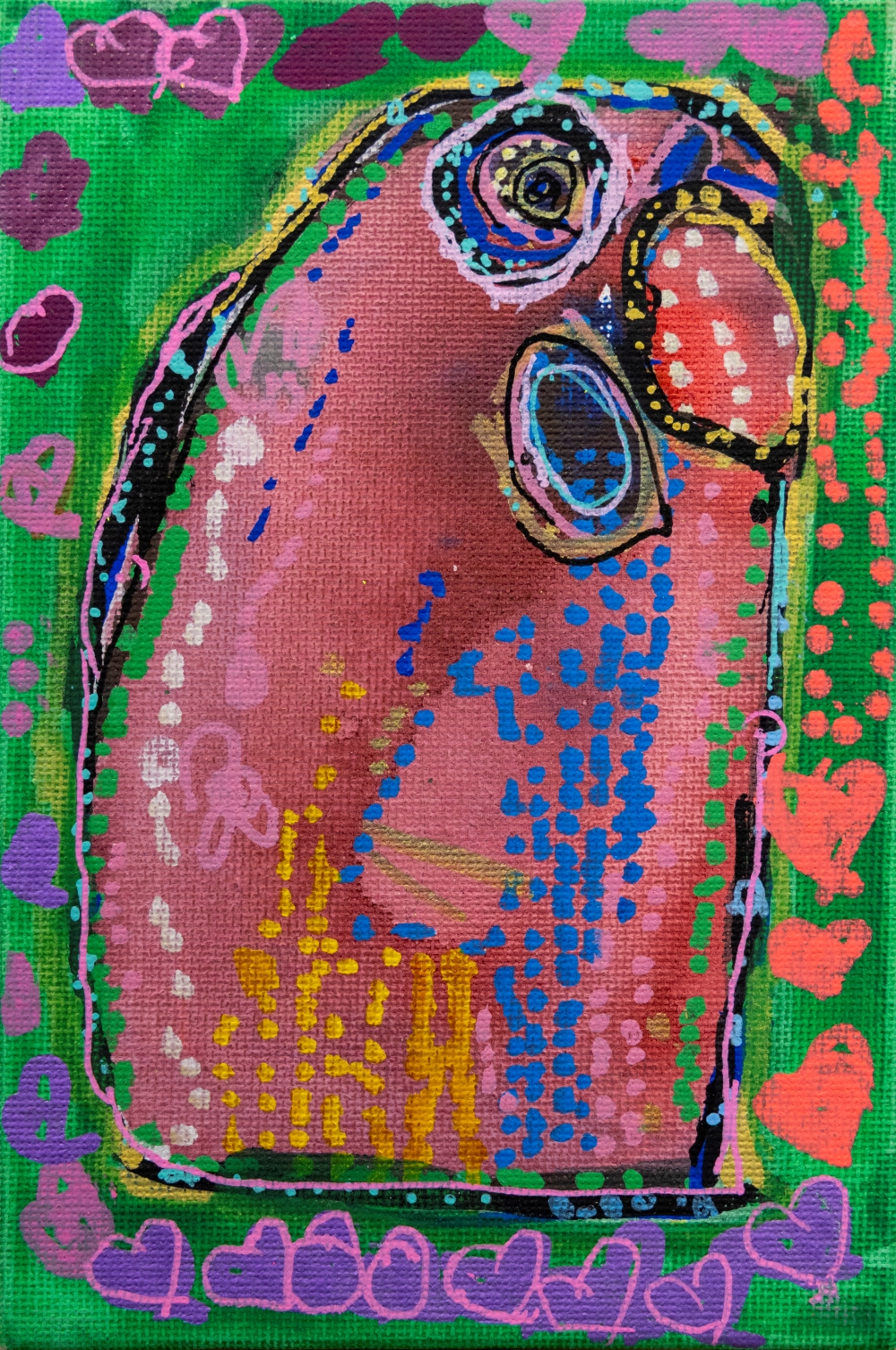
River Dreams Bird | Meagan Pelham | Studio A
When I was a newborn baby writer, an esteemed figure in the industry told me, five minutes into our first interaction, that I’d be too difficult to work with because I’m loud, verbose and annoying.
“I’m never gonna make it in this town,” I wept to friends over the phone, galloping from the big smoke back to my hovel in suburban Djilang, dirtying my only corporate-adjacent outfit (which I’d bought especially for this meeting) with melancholic goop.
Yada-yadaing forward a few years, I’ve since worked with writers in many roles, and have encountered a range of poets. My early experiences of rejection – particularly related to my personhood – galvanised my belief in platforming courageous and unique voices, ensuring that writers have opportunities regardless of our differences, idiosyncrasies (and boy-oh-boy do we have ’em!) and social compatibility.
When commissioning for this edition of Tell Me Like You Mean It, I gave one prompt to contributors: “Go bonkers! (If you want! So fine if not!)”
Be difficult. Be loud. Be verbose. Be annoying. Or not, if that’s not you. Dammit, just make me feel something new.
In my view, anyone who is privileged to curate the work of others, or handle their dreams and aspirations, needs to behave the way they needed as that so-called emerging writer. Constructive feedback within a suitable context? Sure. Reality checks about the difficulties of the industry? If you must. Discouragement and fear-mongering? No, thank you. Unsolicited comments and unchecked biases? No fucking way.
I was published in Tell Me Like You Mean It many moons ago, and as part of the Cordite masthead for the past eight-ish years and counting, I’ve done production work (aka code monkeying) on many other editions, too. In my everyday life, I read a shitload of poetry: both deliberately and incidentally in work and leisure.
When asked to curate this volume myself, my mind flooded with poets whose work had excited me recently and who filled a vague parameter of not yet having a full-length collection published. I’m proud to present a stellar lineup:
Jamali Bowden: A test for the disciple of art
Eartha Davis: kaha, tamawahine / tipuna wahine
Ori Diskett: stat dec (not legal advice)
Merinda Dutton: summer loving
Isabella Eichler-Onus: Spring Clean
Thirangie Jayatilake: New rarest mineral on earth
Joel Keith: To Stella
Ledya Khamou: Love Poem
Maggie Knight-Williams: Begrudging Elegy for a Grief that is Mine
Tim Loveday: Dog Act(or)
Kacey Martin: Aya
August Moulang: The name of a bird is heaven
Mia Nie: if i died and went to heaven
Julian L Palacios: gridlock of queens
S. A. Sisika: Magnetic
Hà Lâm Tô: Lava
Huyen Hac Helen Tran: use case scenarios
Beau Windon: You Want to Chat with Me on Discord?
Troy Wong: Prosperity Toss
Xiaole Zhan: There are wings – 羽 in the pagewind of translation – 翻
Although we frame this series as one focusing on emerging writers, our definition of emergence is nebulous. What is ‘emerging’? When or where does it end? After all, I still feel emerging in many ways – but does anyone ever feel emerged?
‘Emerging’ seems notably discordant with poetry as opposed to other literatures – unless you’re one of a select few, our work generally remains on the fringes. We don’t tend to land the bestsellers and the beefy advances from Penguin (all shade intended to Penguin for not publishing enough local poetry; I said what I said; I told you like I meant it).
Basically, these are writers to watch out for. I hope you’ll enjoy their spectacular work. If you love their poems, make sure you tell them. We could all do with more support from each other.