
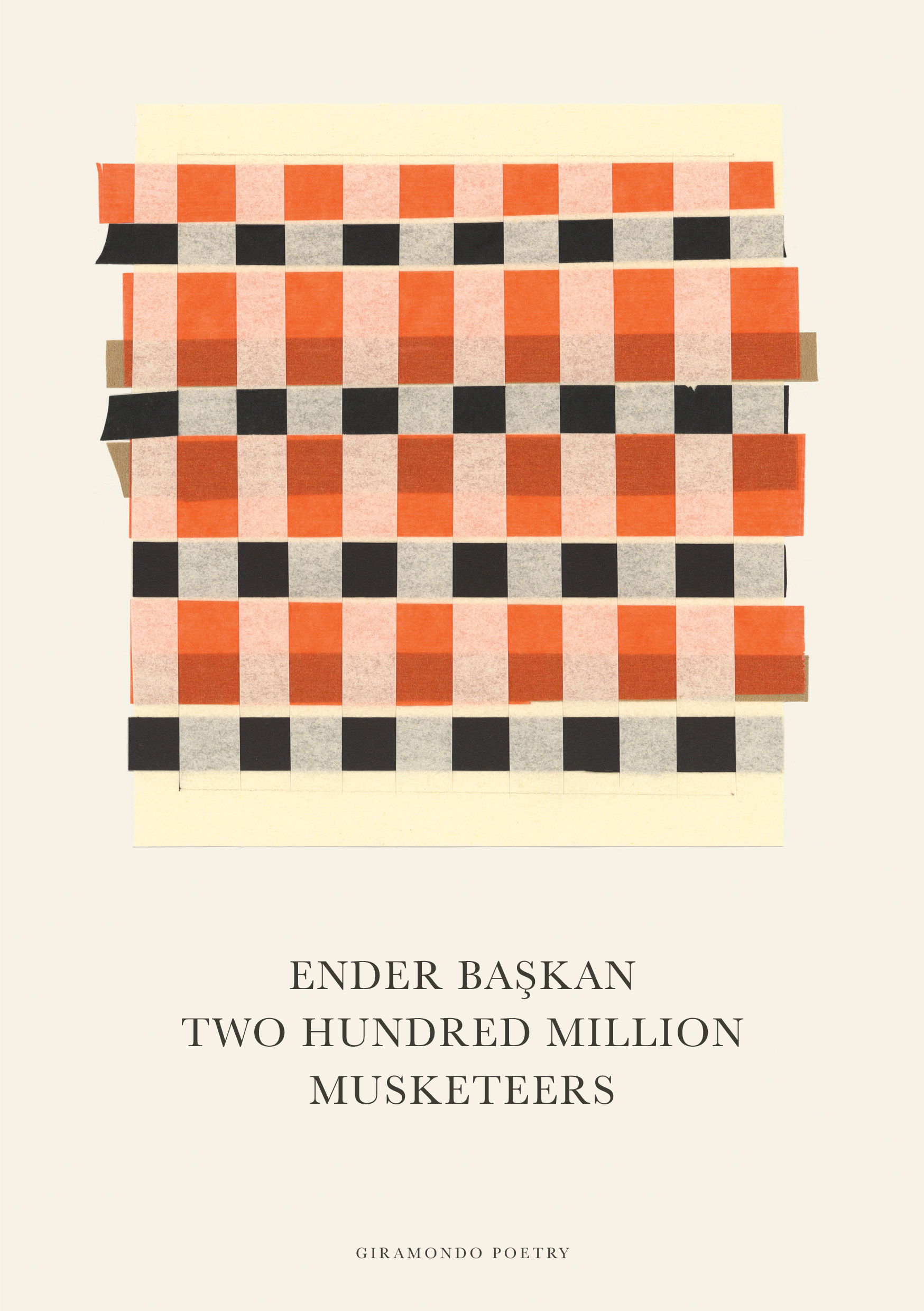
 Two Hundred Million Musketeers by Ender Başkan
Giramondo, 2025
Ender risks the rawdog. To capture things in mid-flight. It keeps him hungry. Keeps you honest.
What draws Ender to this? Ask Sophia, his partner. She’s 80% rawdog. As in, will “PERFORM ANY ACT RECKLESSLY / OR WITHOUT PREPARATION.” As in: “A MEASURE OF RISK TAKING” (‘Hot Water’, 39).
When I say rawdog, I’m thinking of Carol Jerrems’ portrait of the rawest of all, the Surry Hills “flying dog”:
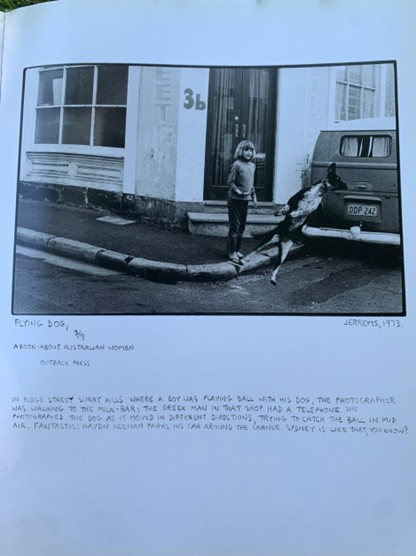
That’s the joy Ender seeks.
But the speaker is not the poet. I know. I know! So let’s separate the poet from the persona. When I say ‘Ender’, I don’t mean Ender – living, breathing out there somewhere, apart from the work, unknown and fundamentally unknowable – but ‘Ender’, the person on the page.
In ‘Here Is The Shirt, (Get) Off My Back / Swimming In The Afternoon’, Ender writes: “the russians have the kremlin / the ottomans had the sublime porte / and both our children have runny noses” (1). It’s a serious political statement. Stare into the abyss of “middle-aged / left-wing melancholia” long enough and the abyss of middle-aged left-wing melancholia stares back (4). Maybe it takes the form of your dad asking when you’ll become a teacher. Maybe it takes the form of your kid, already more radical than you’ll ever be.
Runny-nosed or not, Ender tells his kids, “make your own fun” (Kadiköy, 62). Try to catch the ball in mid-air! Work – but make it unmonetised. Labour according to your own needs. Arguing with his father, Ender philosophises: “fathers have only interpreted the world / in various ways / the point however is to change it” (‘Lion Kink’, 135).
Take risks. Fight capital. Fuck around. Find out.
The child becomes father of the man in these moments, protecting the poet from middle-aged insecurities. Surrounded by former peers at the schoolyard (“prowling hyper-caffeinated / re-financed class-ascendant former schoolmates”), Ender writes:
lucky my kid
is an anarcho-terrorist anti-capitalist critical-theorist
and disarms their line of enquiry with logic
calls them poo-poo heads…
(‘Here Is The Shirt…’, 4)
By this point we’re five pages deep into a seventeen-page long opening poem. But since you can read poetry on the go (easier than a novel!), this is what you might call slow poetry. It’s poetry for folks who read for the breaks rather than trying to make their breaks more productive.
It’s also a brave opening gambit. This kind of runny-nosed run-on length – especially in your debut collection… well. A few publishers and editors might have advised something neater. Tidier. You can picture them pleading: Maybe just a one or two-pager to kick things off?
No, Ender says. Let it run. Go rawdog. Because “of all things to be afraid of im afraid of wanting to /take writing take language to its limit” (6).
The crucible of political awakening in Musketeers is play. Big brother and big father duking it out with bigger dada. Absurdity is inescapable so long as “many of us come from dysfunctional families but all of us / live in a dysfunctional society” (13). Learning to parent, your kid’s runny nose reminds you that systems fail, “an issue of liquidity” can result in class insecurity/judgement, and that the urge to find seven steps to better health, wealth, family, and relationships is doomed. Maths was never your strong suit anyway.
Fail to find these things, though, and you risk entering hell’s seventh circle: fielding the judgement of other parents about how you parent.
you reject a cool dad / bad dad binary
like you reject a rich dad / craw dad
but you have to say sometimes lets go! or come on!
(16)
The family embodies a human need for “food shelter healthcare culture community”. Like the two Kurdish bakers Ender and his daughter buy simit from in Kadıköy, family is praxis. Family can also be a safety net. But mulling over theory and praxis is probably moot if your practice is (mostly) working – or, if not working, simply necessary. Parenting demands pragmatism! If your kid asks, “was phar lap alive when you were a kid dad? / was phar lap alive when frida kahlo was alive?”: that’s theory. If they ask, “whats a career […] whats a wealthy industrialist? whats capitalism? / why do horses work dad?” That’s praxis (‘Phar Lap’, 107).
Whether you enter the grad program or not, whether you wear overalls or fail to, Ender’s here to warn you: be sceptical of parents. (Dads, especially.) The poem ‘Get Your Overalls On’ ends ambivalently, father telling son, “study ender study… you need education”. But what kind? Aesthetic? Class education? No! The kind that facilitates upward mobility. The kind that sees non-crazy John transform into ‘crazy John’, “mobile phone baron / hero of the turkish diaspora” (56).
So what if you’re crazy Ender and not crazy John? If bookselling teaches you anything, it’s that capitalism is pretty tedious and that “the customer is always / the customer” (‘Erotics of Bookselling, 33). Yet tedium has its poetry, too. It lets you telegraph the hive mind looking for its next summer hit:
               its out of print
                              it was published in 1803
                                           and we last had it in 1997
if you want to try amazon you know where i stand
(32)
Ender’s practice, in these and other poems, is to give shape to shapeless days. Not just for himself. For his children. For his partner. For his parents. For his younger self entering middle-age. Procrastination? No time for it.
Because what’s a “dad twice over” to do? Swashbuckle through and hope your alarm clock works. If you want your alarm clock to work, Ender writes, place it just out of reach. Parent yourself. Everything worth having is like Tantalus’s prized fruit. Or maybe it’s like the joke about middle age in Martin Amis’s novel The Information: “He didn’t need an alarm – he was already comprehensively alarmed.”







