
ESSAYS
FIT editorial
How would people respond to the word fit? Not as many sports poems as I’d thought. But hundreds of brilliant interpretations. Too many to fit in the issue. Choosing is difficult. The poems start to form a landscape. They fit together and don’t fit.

After the drive-in
What I remember best is all of the stars, and the robots glistening like they were made of stars, which I guess they technically were. When they clashed, sparks splashed out of their bodies, stretching across the enormous screen that met the sky, so that it seemed like the sparks were leaping up and getting stuck in the cloudless night.

The Algae Will Stay Another Day
I’m staring up at this precious night sky and I wish on a shooting star that the algal bloom will go away. When I look a little harder, I see it’s not a shooting star, but one of Musk’s Starlink Satellites.
Regeneration Is Not a Metaphor
I’m coming to you in English because the tall ships’ memory is still in my psyche, and in the time when I was born in 1992, this lingo was the first language for most of us on the east coast. Even when my youngest granddaughter passed over, they were still speaking in English.
Poetry as Protest; Protest as Poetry
We’ve had reason, lately, to wonder at the effectiveness of protest. Movements like Black Lives Matter and Me Too (or, earlier: the Occupy Movement) mobilised millions of people around the world, yet it feels – particularly in our current political moment – as though despairingly little has changed. This frustration is felt with acute horror in the face of Israel’s genocidal campaign in Gaza, which has seen protestors gathering in the tens of thousands and hundreds of thousands every week for two years, demanding an end to the violence only to be ignored or painted as extremists by their governments.
PRECARIOUS Editorial
What actually do we mean by “precarious”? When I made the call for submissions, I had particular “at risk” spaces on my mind – employment, peace, health, community, ecosystems, social systems. Not only the global but the bodily. Not only systems of meaning-making but the water and the air. So, yes, what isn’t precarious, especially these days?

Fake Gamers, Real Workers
Rory Gillen (he/him) is a narrm based early career Australian contemporary artist, writer, and educator specialising in the politics of labour and technology. His practice spans screens, code, essay, and e-waste, and centers around networks, lost futures, and speculative hype cycles. It is anchored by a sense of optimism for humanities capabilities but deflated by its present reality.

Time Does Not Heal All Wounds: On Writing Poetry as Document
All her life my grandmother, Teresita Meer, taught at the University of Santo Tomas. She was the second eldest daughter among 13 siblings, and her family resided in a compound, once a big house, in Navotas City. Already deteriorated by the time I was born in 1994. My father would tell stories of how my grandmother’s father, Lolo Anghel, was a fierce activist imprisoned during Martial Law.
thalia’s Enduring Shorthand Poetics
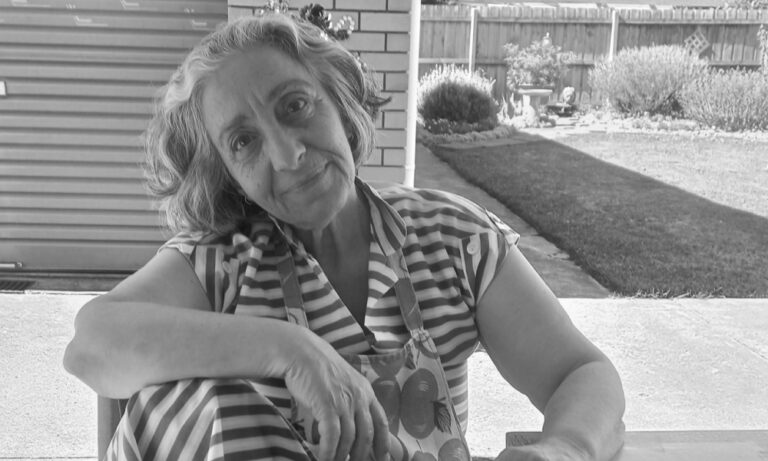
thalia is one of Australia’s foremost visual poets, with an expanded poetry practice spanning from 1972 to the present day, working across writing, drawing, painting, rhinestones, embroidery, and, occasionally, sculptural glass beads affixed to garden walls and fences as graffiti. thalia’s enduring body of work is summarised in her major publication A Loose Thread, published by Collective Effort Press in 2015, which collects over 180 of her visual poems. She herself is a foundational part of Collective Effort the renowned and enduring Naarm-based poetry collective which includes notables such as π.o., artist, sculpture and poet Sandy Caldow, Dadaist Jas H. Duke and poet and editor Jeljte, among others.
NO THEME 14 Editorial
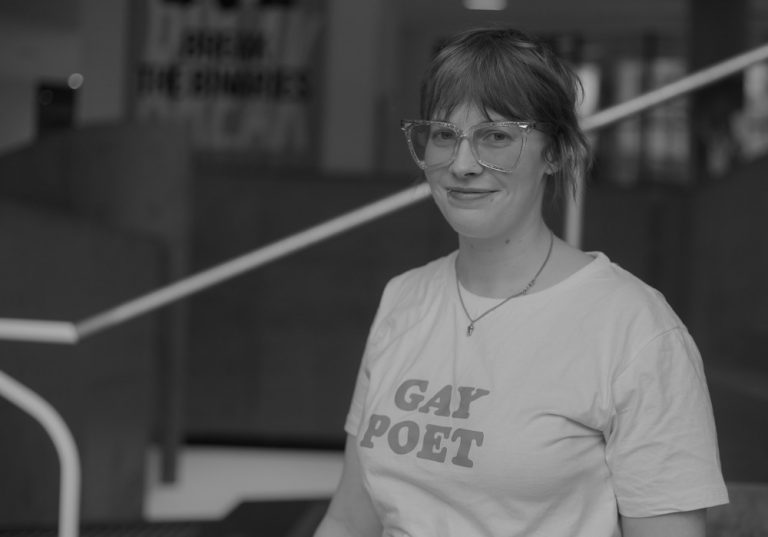
The poetry in this issue is damn juicy. As a writer, there’s perhaps an added degree of exposure or vulnerability in submitting a random suite of your poems, unmoored by theme. Showing your backlog = showing your poetic bussy.
I’m sorry for what I said when I used ChatGPT
I’ve been scratching the back of my head lately, and maybe it’s a new condition I’ve yet to ask a doctor about or maybe it’s old allergies coming back, or maybe it’s because I can’t recall the title of this piece I read, the one that says our bodies are mostly microbial, and I can’t remember what meaning I tried to get out of it, can’t even remember if it was an essay or a medical report, or if it even matters, so maybe it’s not that; maybe it’s because I’ve been worrying about the mistakes I need to make up for while wrestling with the possibility that I may have to move to another country while struggling with the fact that one day I would lose my cat to time.
Rumpelstiltskin and the Girlie Werewolf: the Journey from Linocuts and Artist Books to Lagerphones
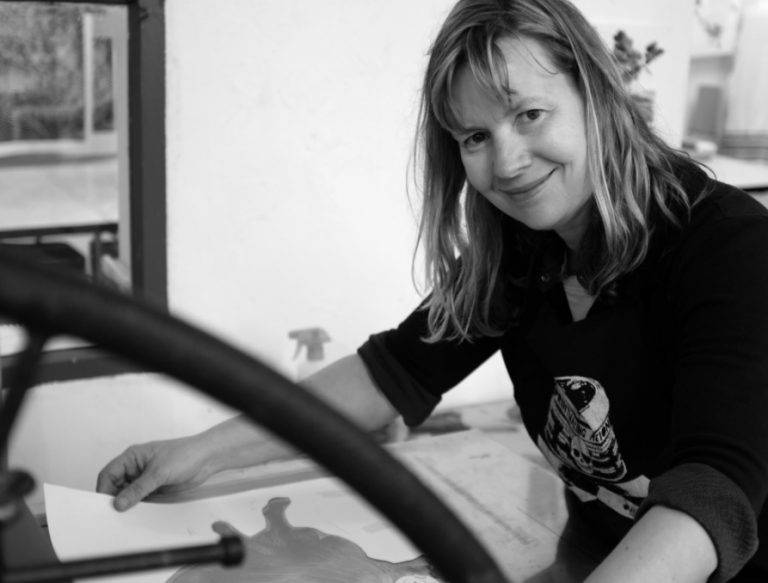
I am the Queen of Reduction Linocuts. At least, that’s how I am introduced to art students or fellow printmakers. I suspect one or two others, including former students, may now share that title, if not claim the crown outright.
Breaking up with Big Tech and Moving on with Life
Growing up in the 90s, we didn’t have internet, emails or smart phones, let alone tech apps or social media. We played out on the streets, read books, went to the cinemas, queued for concert tickets to see bands we heard on the radio, visited places we discovered through word of mouth and sent handwritten letters to each other. Meeting face to face was a big deal and without a mobile phone to bail out at the last minute, we all learned the art of waiting, noticing, and showing up. Analogue days were slow.
Ghost Writing: Translation, Death and Renewal
On 22 June, 2022, I lost my poet. He wasn’t really mine, and I didn’t really lose him, but we belonged to one other in that particular way that translators and poets do, and his death extinguished a partnership between us that had once fizzed with possibility.
Degrees of Freedom in Live-space: Desire Paths and Open World Games
This interactive essay is best experienced on a desktop device. Click the image below to open the essay.
Home Is Where the Heart Is: on Gomeroi Country
When I was a child, I grew up around my grandmother’s dinner table. We would watch her cooking as she explained to us what ingredients were needed, when to put them in, and how she could bring together food and family on the very same plate.
Upon Losing One’s Map: Displaced Affects in Fatima Lim-Wilson’s Poetry
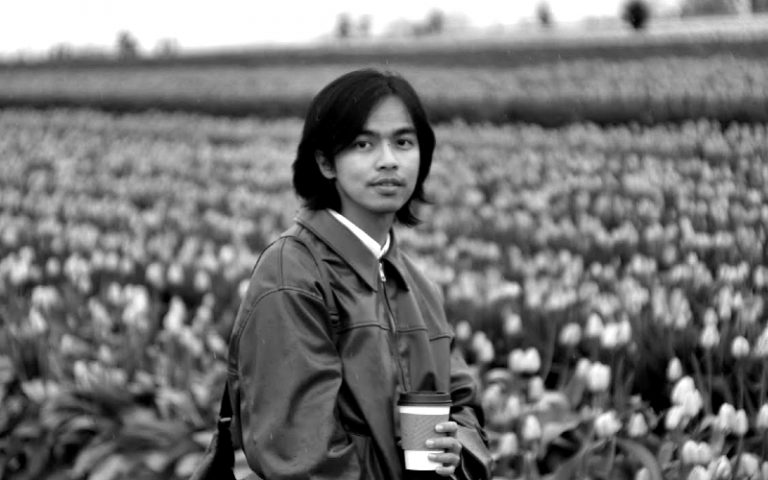
The promise of a good life moves people in sure yet complicated ways. Among the people caught in this flow are transnational migrants who navigate the nexus of economic, political, and cultural realities of living elsewhere, where the durability of possibility is tested. But what happens when the certainty of a promise wears away?
REMEMBER Editorial
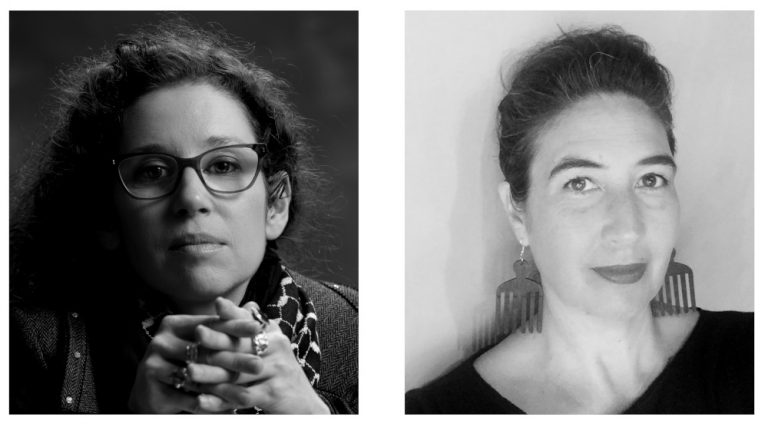
Remembering requires an intermediary to obtain a form and a content. It might be a family or here a poet, it is unceasing as a task and not an artefact.

Finding Home: On the Poetry of Place of Luisa A Igloria, Marjorie Evasco and Merlie M Alunan
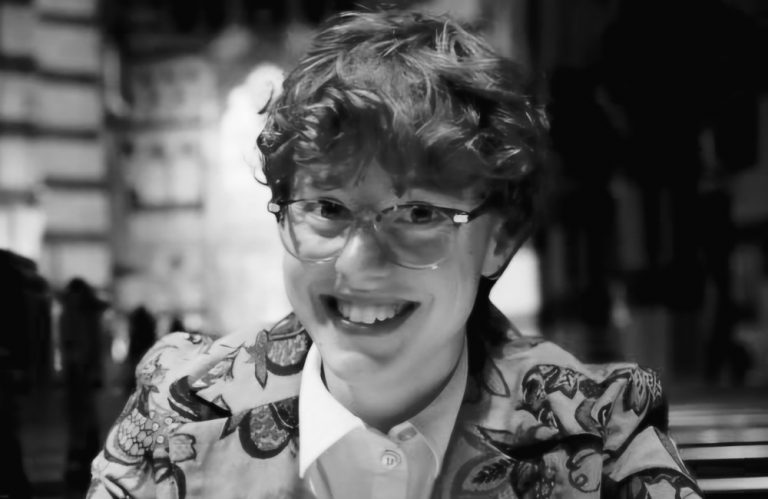
For decades, Filipinos were taught that the country was ‘discovered’ by Ferdinand Magellan. The Portuguese explorer led the 1519-1522 Spanish expedition to the East Indies, credited as the first circumnavigation of Earth. Antonio Pigafetta’s chronicle of Magellan’s voyage became one of the earliest documents recording the culture of 16th-century Philippines.
SPACE Editorial
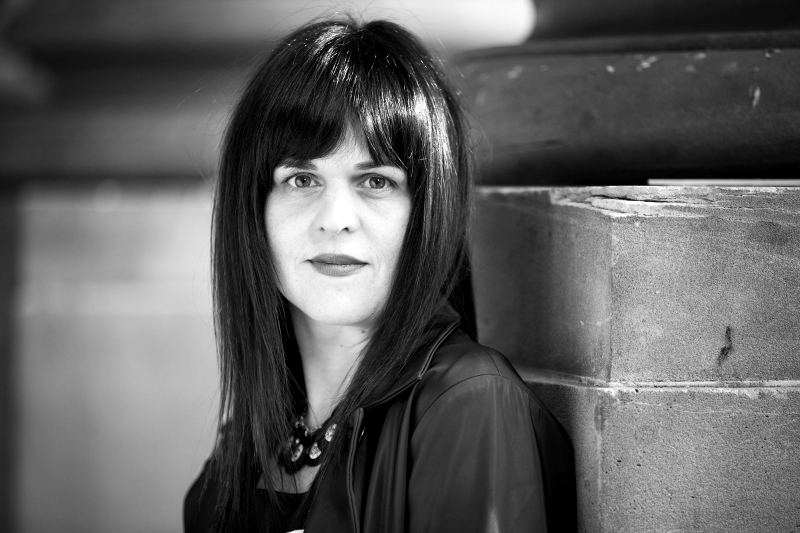
We often think of outer space as being vast, daunting and mostly empty, but it is abundant with fields we just can’t see. There are different kinds of fields, some are classical or quantum – all with values assigned to them. Coordinates.

Stretches of Time: Boring Poetry Between Jackson Mac Low and Kenneth Goldsmith
‘I am the most boring writer that has ever lived’. This the opening to the short essay, ‘Being Boring’, by the conceptual writer Kenneth Goldsmith.

ᜉᜄᜐ (PA GA SA)
Part 1: Lola ᜎᜓᜎ I remember my palms, you reading. Remember the oceans of thought through your breathing, you speaking, you teaching me everything you were taught to forget. I remember your knowledge through dark wrinkles on even darker skin. …
The Ugly Poem: Ouyang Yu’s Terminally Poetic and the Counter-Aesthetics of the Multilingual
Beauty has a quality about it that pretends to neutrality and universality, despite being steeped in asymmetrical constructions of aesthetic judgement. Of course, this is no surprise in a hierarchical world; ‘Taste classifies, and it classifies the classifier.’







