I’ve been meaning to write about Parramatta for almost two years now. Mainly because I love it here, but also because I feel uneasy at times. A disproportionate amount of my week is spent in Parramatta Square, ever since the corporate offices, the university and the library with its honeycomb roof converged here in 2022.
Some days I feel as if my peripheral vision is doing all the seeing, objects and landmarks dipping out of focus on my walk from the university in the sky to the eel sculpture down the arcade end. On a random Tuesday, I look down at the ground and notice two large pavers with footprints and emu tracks carved into the granite, acknowledging the Burramattagal people who have walked this path since time immemorial.
A couple of years ago, I spoke with a landscaper who told me the eel statue, wrought out of pink and grey slabs to the point of abstraction, is rumoured to have cost the city a few million dollars, an amount I initially balk at, but later come to accept as the price of being able to call Parramatta Sydney’s ‘Second City’. When I go back on a Friday, I try but fail to spot that impressed mix of human and animal prints I saw earlier in the week, and wonder if I imagined those carved apparitions.
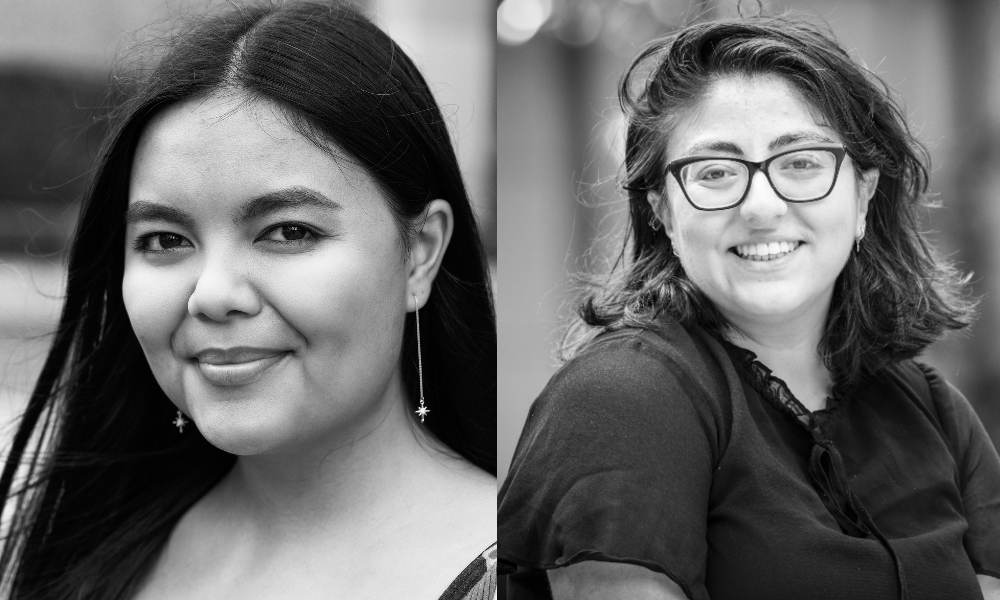
The next week, I am walking along the river with Parramatta’s second Laureate of Literature. Eda Gunaydin, a writer whose work I’ve been obsessing over longer than I’ve been obsessed with Parramatta, guides a group of four along the riverbank. I love this water, for all its murk and floating strips of ravaged juice cartons and textiles whose original function is now obscured by mud. Eda starts the walk by asking what we already know about Parramatta. Henry, a fellow walker and writer, is the first to say that Burramatta is where the eels come to burrow and sleep.
The Parramatta River is a romantic site for me. I go for long walks, stop by the park cafe for flat whites, watch amateur cricket, have picnics on the river’s steep banks. A few summers back, a water dragon, gargantuan and red-breasted, disturbed one of them. He seemed comfortable near our checkered rug, and stood still for many minutes until we decided to move our lunch away from his watery domain. While picnics can be had elsewhere, wildlife cannot. I am thinking of the water dragon as the four of us walk by the site of Dodd’s Farm, where nothing remains now except a plaque with cracked varnish. Someone has left a wrapped and loaded nappy behind the information about Parramatta’s early British invasion.
One of my favourite Eda Gunaydin essays is called ‘Second City’, which is about Parramatta’s rapid development and gentrification. In it, she mentions how the sites that “have been deemed most worthy of protection in Parramatta today bespeak a colonial nostalgia.” I can’t deny the colonial nostalgia I feel, an almost macabre interest I have in the historical violence that underlies Parramatta, which, along this guided walk, peeks through the sandstone arches of Lennox Bridge and the hulking beige of Old Government House. I ask Eda if we can go up to the “oldest surviving public building” in Australia, the settler colony’s first seat of government. I ask because I want to know whether our walking group picks up on the building’s haunted vibe, whether the ghosts of 18th century redcoats radiate from the officers’ quarters out back. I ask Eda whether she believes in ghosts, like really believes in the tangible presence of them, not just as metaphors for violence or truth-telling.
Two park rangers hop into a Barbie-sized jeep, but before they can accelerate towards the cricket ground, I wave them down. Excuse me, I say, but where has the rotting wood that used to mark the cattle enclosures of Dodd’s Farm gone? They are remnant signposts of dairy farms the British settlers imposed on Burramattagal Land, an historical marker of the violent dispossession that was to come. The rangers are nice in their reply, but can’t advise where the heritage fences have gone, or whether they ever existed.
En route to Old Government House, we spot a baby duck paddling circles under Noller Bridge. It is by itself, a lone duckling born a few days prior, speckled and still downy, and we call to it. Henry tries to coax it to the bank where they can maybe scoop it out with a cap. Next to me on the bridge, Suzanne calls WIRES to report the abandoned duck. Suzanne is still on the phone – they’ll be here in an hour – and the duckling is still going in circles, and Henry has now grabbed the detached limb of a ghost gum. Eda tells me ghosts appear in our vision when our minds try to process grief, the change that comes with loss. Apparitions are what remains of places that are no longer what they once were. The baby duck has imprinted on Henry, we think, who declares themself its mother.
Bubbles rise from the water under the footbridge. Maybe a fish, Eda speculates, and a spandexed cyclist dings past us as a freshwater eel surfaces from the shallows beneath. The eel is a majestic creature, its leathery curves shining as the sun refracts in the water. It is so alive in this present moment. The eel, Parramatta’s mascot, slinks along the bank where Henry stands while Eda googles that yes, eels do in fact eat little baby ducks because they are ‘opportunistic carnivores’. The four of us watch with sharp unease as the eel finally snaps around the duckling with a speed and vitality that belies its victim’s very existence. Burramatta is where eels come to lie, but these shallow waters are also where they rouse themselves, to hunt and to feast.
We are walking back towards Western Sydney University’s Parramatta Square campus, the one Eda mentions in ‘Second City’, whose “red logo [draws] the eye like a laser pointer.” By the time we are drawn back to where we began, we are still in shock, and I stop for a second in front of the coffee shop at the building’s foot. The cafe is called The Naked Duck, and I laugh at the sheer depravity of the moment, at the ghost of the baby duck I imagine will haunt the Parramatta that exists in my mind. It is a Parramatta I love for the civic square in which skateboarders gather and office workers break for lunch, and street preachers evangelise, and Falun Gong members protest the Chinese government.
When we are back at the university in the sky, Eda gives us a list of writing prompts, the first two of which are to note down one thing on our walk that seemed permanent, and another that seemed temporary. I think of the ghosts of Old Government House and the duckling, and think about how ghosts are both permanent and temporary, and so very real if only you believe they are. Ghosts are what appear when the violence of history returns to remind us of what used to be here. They hover above and below the buildings and pavers that are here now, ephemeral figments of my vision that make me uneasy whenever I walk through Parramatta, across this square I adore.

This article has been commissioned in partnership with Diversity Arts Australia’s Creative Pathways Parramatta project, supported by the City of Parramatta. Diversity Arts Australia receives core funding from Creative Australia and Create NSW.