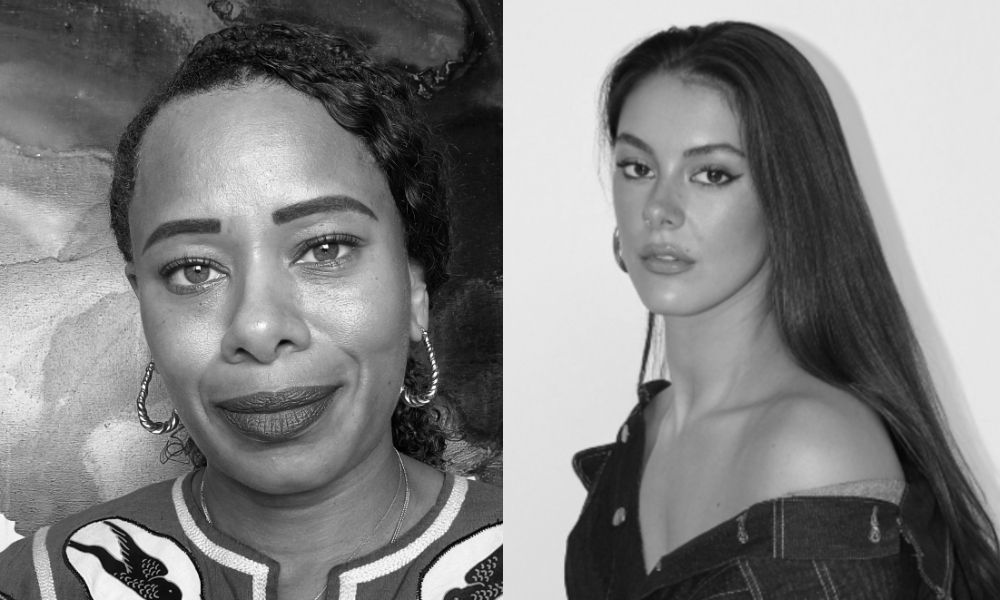
Little did I know my education in dance and life would reach such a high level when I sat down at Arts & Cultural Exchange in Parramatta with Georgia Kidd, a Gundungurra woman, dancer and choreographer who has worked and toured internationally with artists like Jordin Sparks, Shenseea, Stefflon Don, Libianca, OneFour and Yung Milla. Kidd, 25, is also carving out a path as a visionary leader with an industry-recognised brand, The Aux. At a pivotal moment in her career, I learned a lot from chatting with her about spirituality, self-determination and self-care.
Sydnye Allen: This is an awesome experience for me in auntie mode, talking to someone young with huge plans. I really want to hear your story. Where did your dreams start?
Georgia Kidd: I’m a proud Gundungurra woman. When I was younger, I faced a lot of adversity, like not being Blak enough because of my skin colour, and maybe my size, weight and everything within the industry. Through that experience, I’ve seen many of my friends face the same barriers. I dropped out of school at 16 and started dancing. Since then, I’ve built this business [The Aux]. I wanted to support people going through what I went through. Then people started jumping on what I had to say, offering opportunities, and I started booking my friends on jobs, etc. Now, I’m all about representation with no limits. I represent talented people in entertainment, whether they’re an artist, dancer, singer-songwriter, whatever it may be. Long story short, my experiences have shaped what I do now.
SA: Who’s in your community? Where did you grow up?
GK: Western Sydney, on the Warragamba Dam water board. I lived in a caravan for the first few years of my life, in the back of my grandma’s house. I was raised on bikes, motorbikes and climbing trees. I wasn’t a social media girl. I didn’t watch much TV. I had a very humble family life. We moved to a suburb just around the corner, and we’ve been in the same area, in the same house, for 23 years now. I’ve never left home except to travel.
SA: That sounds awesome, being able to have that safe base in the same home for 23 years. That must feel good. Tell me about that, when you go out to these big, amazing opportunities. What does it feel like when you get to go home?
GK: It’s very humbling coming back home. My family humbles me. It’s good because I’m always representing myself, my family, where I’m from. It’s always been at the heart of what I do, and I think it’s important, when you are doing amazing things, to know where you’ve come from. You have to keep your roots strong. My family, they’re very proud of me. They’re also a bit scared about things I have to do, like travelling. My family is my rock. It’s hard to leave them. It’s been hard to miss time with them, but they’re supportive.
SA: I want to understand a little more about the inspiration for you starting The Aux. It’s a business, but it’s also a community and creative social enterprise for you and everyone who’s important to you. How did you get to the point where you decided you had to be the one to create this opportunity?
GK: Firstly, from personal experience. You know, being the change I wanted to see. I didn’t agree with things, and instead of just complaining and forgetting, I wanted to take action. I’m very outspoken, and I was motivated to build a community. The Aux is an inclusive space. It’s open to anyone. Everyone is welcome at The Aux.
SA: What do you see as the next big thing for you?
GK: Working with others to reshape the Australian entertainment industry. It’s one of those things where I’m like, what’s more important to me right now: accomplishing my own dance and choreography dreams, or helping the Australian industry build a better network and supportive system for anyone aspiring to be a bigger artist, dancer, or creative?
SA: That’s huge! You being so focused at this stage of your career and going, okay: there’s my choreography dreams, my dance dreams, or there’s all of us. What’s going to help you make that decision?
GK: That’s the thing! I don’t know. I had a really vivid dream last night about a whole heap of wind gusting through my house. I was standing there, and I saw myself being this very anxious, confused person. Then I saw a version of myself that was relaxed and confident in what I wanted. I think that’s where I’m at right now. I feel like Georgia, as someone with goals, wants to do these things quickly so I can get back to the bigger thing that’s bigger than me. I’ve always wanted to create something that’s bigger than myself, leave a legacy and make a change. But it’s like, do I need to quickly do me for a couple of years and then come back to the bigger picture? I don’t know what’s going to make my decision. Maybe this conversation today. You know what I mean?
SA: Well, it’s like everything, right? Every moment leads you to the next place you end up; you know, the next version of you tomorrow is shaped by every other experience you had until you wake up. Like the dream you had. Who are some of your mentors?
GK: I don’t think I’ve had mentors. I’ve had people [who have] influenced my path a little bit, but I’ve really struggled with that. I look up to people, and I go to them for advice, maybe, but at a point, I feel like we’re on the same wavelength, or then it’s one of those things where I feel like [I’m not] aligned with them anymore. Do you know what I mean? Parris Goebel is someone I draw a lot of inspiration from. Her thing was to connect New Zealand with the world, and she’s done that. I also feel like in doing that, she’s helped Australia and set the standard for creatives from this side of the world. I’d also say [American dancer] Sean Bankhead from a choreography perspective. I think he’s very clever and business-minded. In terms of people in Australia, I haven’t really had anyone. I don’t get along with people my age; I feel more like an older soul with a bigger purpose. I don’t really care about cliques and things like that. I’m constantly setting my own path, and I’m definitely the blueprint of what I want to do.
SA: Mic drop! “I’m the blueprint of what I want to do.” I know that’s right!
GK: In a non-cocky version! Just a very confident, know-what-I-want version. I know that can sound like a lot, but I honestly feel like that is because, with The Aux, I found a loophole when no one wanted to. I jumped on it, and since then, people have tried to build similar businesses, but I don’t think any of them will ever take off as mine did. When you’re the first to do it, it’s hard to chase, you know.
SA: I can also hear in your role as a leader that you feel tension when you don’t have someone to give you advice. I can imagine that’s created a lot of pressure on your journey.
GK: I’m also very spiritual, and as an Aboriginal person, I connect to Country a lot. I get a lot of satisfaction and reassurance from that: sitting with my own thoughts, thinking about what I want, and then thinking about how I can achieve it. Being around nature helps me so much. I get energised, you know, because you get knocked back so often, and it energises me to get hit again with a ‘no’ or pick myself up off the floor when no one’s going to come save me, sort of thing. For me, I just have to constantly back myself.
SA: You have natural-born leadership because you’re speaking from this authentic place of yourself and also being guided. The balance is another thing, because your industry, your profession, your world, exists online. The way people know about your work is that you’ve got to post it! It’s got to be seen by people globally for you to be able to make these next steps that you want in your career.
GK: That’s something I’ve really struggled with. Since the start of this year, I’ve really prioritised social media. It’s been hard to show up on social media because it comes with a lot of judgement: comparing myself to other people, and everyone only sharing the best of what they’re going through. It has been hard. It’s just one of those things where it’s a bigger purpose now. I have to show up for my community. It’s not just posting to get my things seen globally. It’s more like being there for people to reach out to.
I recently shared an Instagram Story on my Tourette’s. I have Tourette’s syndrome, which has shaped me and my leadership; I guess it’s my strength, because it’s been a hard battle for me. I spoke about that recently on a podcast, and the messages I received made me feel overwhelmingly grateful. I have a purpose with social media beyond just advertising.
SA: Thank you for sharing that you have a disability that is invisible to people who aren’t aware. You feel safe enough to disclose that, so others can go, “Georgia was talking about this, maybe I can feel more comfortable saying something.” That’s a lot of vulnerability.
GK: It was.