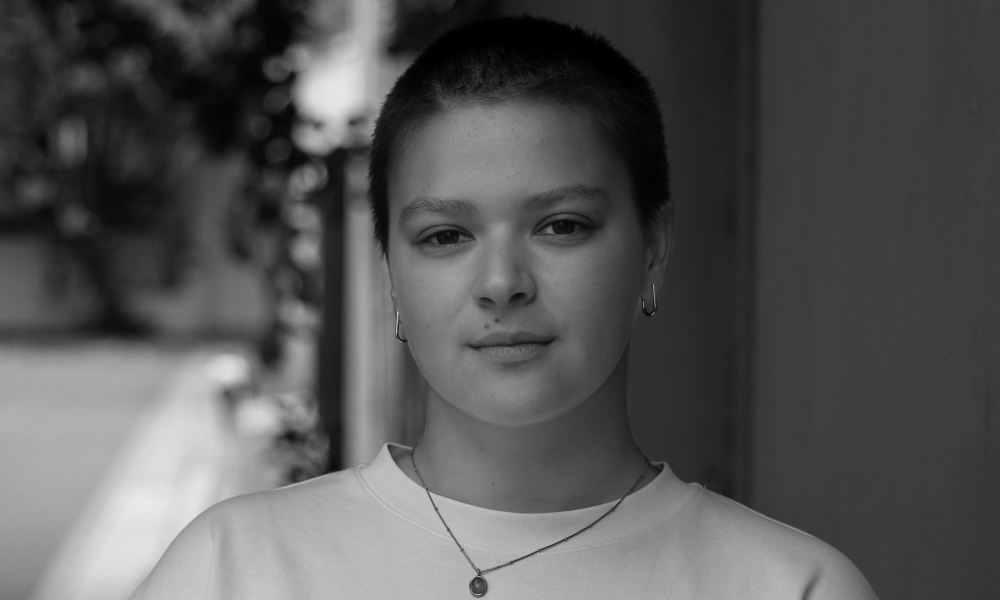
 Image by: Sia Duff
i’ve been collecting a deep rage, it’s hardened in my stomach, not quite ready to be spat out in full
– Haunani Kay Trask, ‘The Color of Violence’1
i keep it as an excuse, it kinda makes me feel sexy, although some days it makes me nauseous and i gag and i try to spit it out and i –
swallow it back down
it’s become a bit of an obsession, waiting patiently as i gather what i need to articulate, acting enough for you to see me beyond blood quantum and not a big ball of tears like the ones you weaponised against me when you witnessed my belonging, realising you didn’t
so ive cherry picked the bad parts:
my stan avatar shades darker than my skin tone
dark skin = Aboriginal
relationship: only blak friend
my cup of tea always handed to me in a mug… with an Aboriginal design
the same mug taken camping on Gugada, Wirangu and Barngala-gu munda
“you can borrow my cup like i borrow your land” borrow land??
it’s a kind of rage that borders on grief and to hide the fact that it has been a complete undoing would be an injustice to myself. something was stolen from me that trip. something bigger now replaces it.
the act of returning to a place my family haven’t lived on culturally since my grandparents were moved to the Koonibba mission is significant. it’s a contemporary cultural practice rooted in love and loss – tracing through memory, (re)membering, carrying nostalgia for a place i have only known through story.
it was intuitive, the significance was unspoken – i decided to invite walybala-gudhara (two whitefullas) who had been on this journey with me, gaining a deeper understanding of the place in which i speak. it’s an incredible privilege.
there was a moment on a swing on Nukunu Country, across from the melrose pub and the sun was just about to set. i fell completely silent, uncomfortable by an emotion i can’t articulate –
it was layered with grief (infinite), anxiety, a longing, it was unsettling. i was feeling vulnerable and they had noticed.
we camped close by that night, drinking tea handed to me in a mug with an Aboriginal design, we stared up at the stars and i began talking about Yangarilya (Seven Sisters dreaming) – a songline that connects women globally. to my surprise i was hearing crickets, how could you not be in awe?
upon arrival, i was met with intense emotions of grief, hiding back tears, i walked off to re-introduce myself back to munda. a practice i carry while travelling across all language groups so the ancestors are able to place me.
sitting by the garla, settling in, we heard a little rustling coming from my car. the bird i had hit during our travel was trying to escape. it’s legs were stuck just below the bonnet of my car and we worked to get it unstuck. i’m uncomfortable with birds – even the native kind.
we managed to get the bird unstuck. a few minutes later i located where the bird was bleeding, pointing near its beak, in return the bird bit me and then flew away.
the person assisting with the bird was curious about what kind of bird it was (she had packed a bird book on the trip).
me: “oh it’s probably a magpie”
person: “oh but it might not be”
me: “well it looks like a magpie”
person: “well you look white, but are you?” she says with aggression, throwing her arm out and her body forward at the same time.
i crashed, burned and died within seconds. (how does one prepare for racism?)
Racism:
jealousy in witnessing my belonging,
i was incredibly emotional before the event of the bird but eventually i gathered myself, standing sovereign, telling her that what she had said was not okay.
we cry and she proceeded to tell me that it was a “bad example” of what she was trying to explain.
“i just think people cherry pick their Aboriginality, why can’t we all be equal”.
we move throughout the trip with caution of each other but the microaggressions towards me continue.
at this point our patience with each other was fragile. we set up camp one last time and my tone towards a question had upset her.
we took a time out from each other but once we confronted one another again, what happened next was a complete undoing.
what’s funny is the very thing that had happened, was the very thing that she told me to read, forcing it down my throat so i have quoted the very book: White Tears/Brown Scars by Ruby Hamad to remind you of your privilege and violence as a white woman.
in calling out her “bad example” of comparing my racial ambiguity to a bird, i was the bad friend because i wasn’t hanging out with her boyfriend. i challenged her identity as a good moral person by connecting her to systems of racism. her good morals being that she was capable of having the language for anti-racism but was not capable of being anti-racist.
i was met with defensiveness through tears, she was the one that was angry and although the tears were genuine they were not innocent.4 placing the blame back on me was claiming an innocence and victimhood that only white women have the ability to do by moving between being the oppressed (gender) and the oppressor (race).5 it was a means of white racial control and protection of her race and racial superiority.6
she was not able to engage with me as a Gugada and Wirangu woman on Gugada, Wirangu and Barngala-gu munda. only hearing it made it digestible and accepting, seeing, hearing, smelling, tasting and feeling it made it threatening. my Aboriginality was too close for her now, seeing beyond blak oppression and assimilation but the embodiment of Country and continual connections.
she had selfishly centered herself in a place she had been invited into, asserting an authority and knowledge of a broad sense of Aboriginality. i was not ‘Aboriginal enough’ because i didn’t want to nurse the bird back to health, having the audacity to determine i cherry pick my Aboriginality. on reflection there was a festering resentment i had been unaware of because when culture and wangga was generously shared there was white noise – this gaze continuing her blood memory of surveillance.
i have realised that we are always the one expected to arrive with peace, creating comfortable spaces for white people to explore their ignorance, but never given the same peace in return when we confront them about their ignorance.
our friendship ended the second i left her house.
over the last year i have noticed her advocacy and ‘allyship’ on blak politics escalate since our falling out. this is a means to cover her white guilt, continuing her assumed authority on the subject and it infuriates me because she did not respect the nhangga in her home, my home and especially on munda. it’s performative and no one should trust it.
having ‘beneficiary of colonisation’ in your bio didn’t pack the punch you thought it did.
we know you’re a settler, you don’t have to spell out that your family’s farm pays for your higher education. projecting your white guilt doesn’t fix your subconscious bias or john howards ten point plan. your solidarity and advocacy is as poxy as your cry for equality between us.
Munda, you had my back that trip, you knew something beyond what i was returning for and in this i am reminded that you do not belong to me but i to you
our sovereign connections do not live in isolation
but in a lullaby.
- Alice Te Punga Somerville, Always italicise: How to write while colonised (Auckland University Press, 2022). ↩
- Ruby Hamad, White Tears/Brown Scars (Melbourne University Press, 2019). ↩
- Ruby Hamad, White Tears/Brown Scars (Melbourne University Press, 2019). ↩
- Ruby Hamad, White Tears/Brown Scars (Melbourne University Press, 2019). ↩
- Ruby Hamad, White Tears/Brown Scars (Melbourne University Press, 2019). ↩
- Ruby Hamad, White Tears/Brown Scars (Melbourne University Press, 2019). ↩
- Bond, Chelsea (2019) ‘Talkin’ Down to the Black Woman’. Australian Feminist Law Journal, 45(2), pp. 185-189. ↩
- Clare Land, Decolonizing Solidarity: Dilemmas and Directions for Supporters of Indigenous Struggles (Bloomsbury Publishing Plc, 2015). ↩