
“Each imposes a fungal logic or constraint on the poem while leaving other elements – subject, language, rhythm, voice and meaning – free to grow within it.”
Fungi have long provided poets with images of decay, interconnection, transformation, and hidden life. Recently, I became interested in a different possibility: beyond writing about fungi, to allowing fungal structures and processes to determine how a poem is made.
In July, the Australian Labor Party formally recognised fungi alongside flora and fauna in their national platform, committing to the conservation and restoration of “flora, fauna, oceans, fungi, and waterways”.1 Conservationists have welcomed the recognition as a potential first step towards including fungi more explicitly in biodiversity assessment, conservation, and environmental policy.2 The recognition feels overdue. Australia may be home to as many as 250,000 fungal species, yet fewer than 12,000 have been formally described.3
Most of us encounter fungi as mushrooms, but the mushroom is only the visible fruiting body of some fungi. Much of a fungus exists instead as mycelium: networks of thread-like hyphae living underground or within organic matter.
A subset, the mycorrhizal fungi, form symbiotic relationships with plant roots, exchanging nutrients for sugars and carbon from their plant partners.3 A 2026 global mapping study estimated that the world’s topsoils contain a mind-boggling amount of mycelium – around 110 quadrillion kilometres of living fungal hyphae for arbuscular mycorrhizal fungi, which form symbiotic partnerships with about 70% of plants.4 That is in just the top 15 centimetres of soil.
The recent recognition and growing scientific attention given to these hidden systems prompted me to reflect on the forms of intelligence found in natural systems that are frequently overlooked, and how we might learn from them. I became particularly interested in whether the structures, processes, and logic of fungi could inform not only what poetry says, but how a poem is made. That is, how might fungal systems inform the formal logic and structure of poetry?
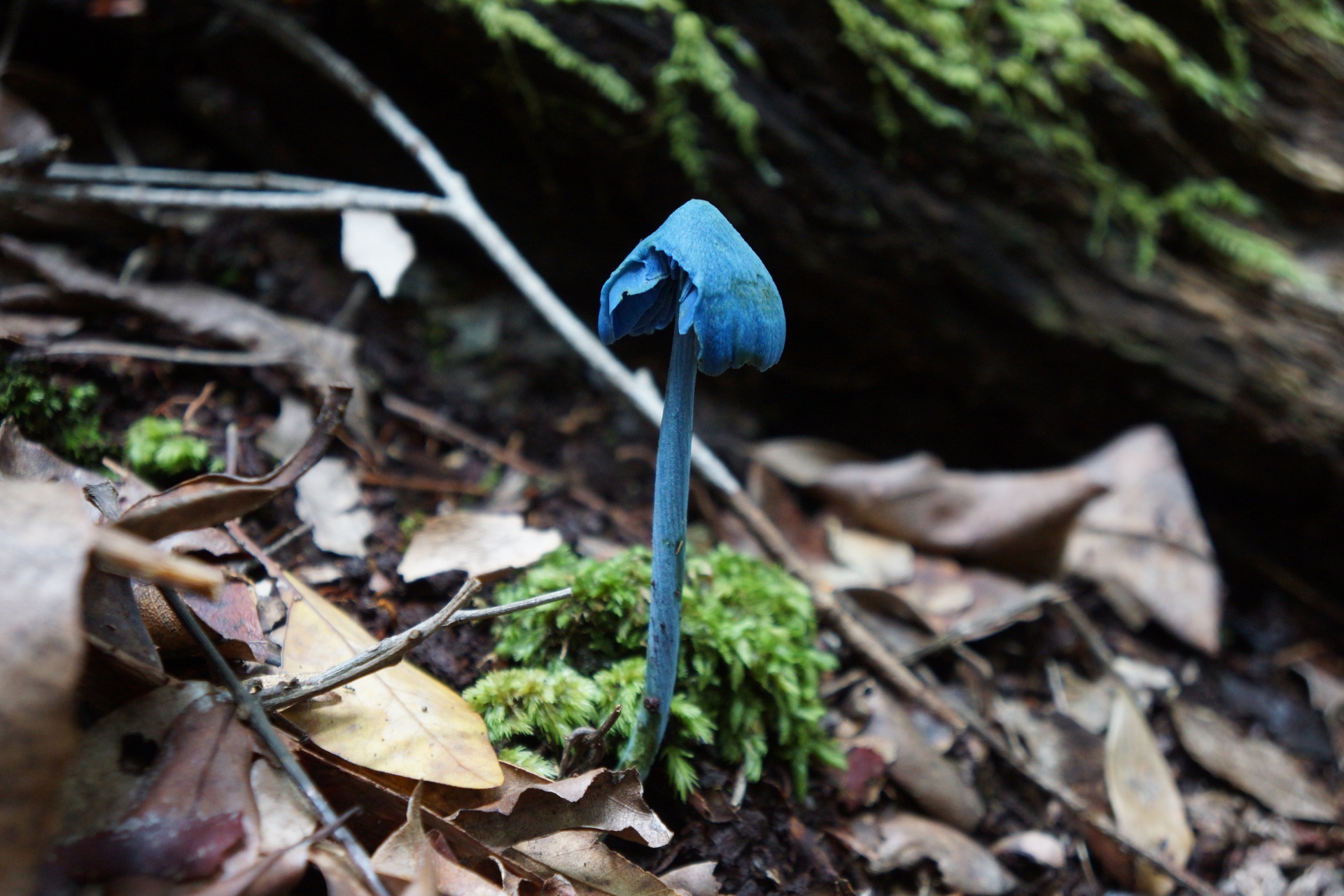
A mycoform is an invented poetic form that borrows a feature or process from fungi to inform its form, logic, sound, or poetics. Like fungi themselves, mycoforms form a diverse family rather than a single fixed form. Each imposes a fungal logic or constraint on the poem while leaving other elements – subject, language, rhythm, voice and meaning – free to grow within it.
Importantly, mycoforms do not necessarily represent or describe fungi. They behave like fungi. A poem about a mushroom is not necessarily a mycoform. A poem about a father, written according to fungal branching or connection, is. The same may be true of a poem about memory, grief, migration, communication, consciousness, or social connection when a fungal structure or process offers a useful way of thinking about or organising its subject.
A fungal analogy alone does not make a poem a mycoform. The borrowed fungal feature must produce an observable compositional constraint. In this sense, the constraint is not simply restrictive, it provides a generative rule, limiting some possible movements of the poem while opening others. The mycoform attempts to make a poem that behaves, in some small way, like a fungal system – to translate a biological structure, process, or logic into a poetic one.
Mycoforms emerge from a broader tradition of biologically and ecologically derived poetics, in which ecological processes influence not only poetic subject matter but poetic method and form. Patrick Jones’s concept of “permapoesis”, for example, proposes an ecological mode of poetic production informed by permaculture and explicitly concerned with participation in the biosphere “not just in content but also in form.”5 Mycoforms extend this principle into biomimetic formal invention derived specifically from fungi: rather than representing fungi as subject, they translate fungal features into constraints, forms, and processes from which poems can grow.
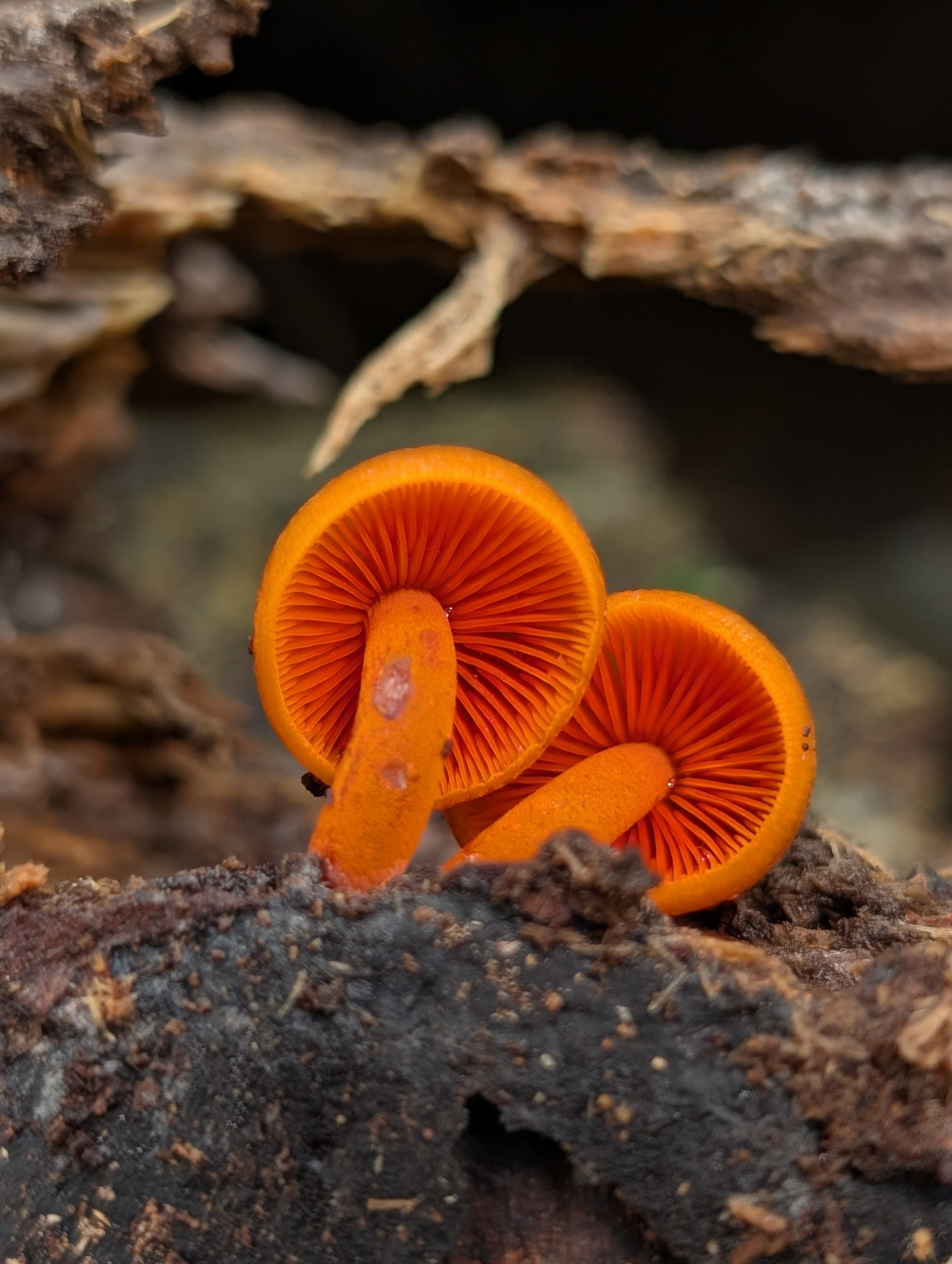
There are also precedents for bringing fungi into poetry. Mycoglossia, a collaborative poetry project by Fiona Glen and Nina Hanz, offers a close fungal relative, combining collaborative creative practice with fungal voices, themes and imagery.6 Mycoforms instead ask whether fungal systems can inform the poem’s formal logic itself. Can a poem borrow not merely the image of another living thing, but its way of organising itself?
Similarly, Lesley Wheeler’s poetry collection, Mycocosmic, uses fungal metaphors and imagery. It also features an ‘underpoem,’ a book-length verse essay about fungi, running across the foot of each page, functioning like a subterranean mycelium beneath the poems above.7 The structure creates a relationship between the above and below ground worlds of the book. This makes Mycocosmic a particularly relevant precedent for mycoformic poetry, and its underpoem might be considered an early mycoform where fungal structure goes beyond content to inform the organisation of material on the page. Mycoforms, however, extend this practice to a broader family of formal inventions, in which fungal structures or processes produce explicit compositional constraints that need not rely on fungal subject matter.
- The Australian Labor Party. (2026). Australian Labor Party Draft National Platform. https://laborconference.org.au/files/2026_ALP_Draft_National_Platform.pdf ↩
- Ross, H. (2026, August 18). Fungi fans celebrate its recognition as nature’s third living kingdom. ABC News. https://www.abc.net.au/news/2026-08-18/fungi-living-kingdom-recognition-biology-environment/107029164 ↩
- Sheldrake, M. (2020). Entangled life: How fungi make our worlds, change our minds, and shape our futures. Random House ↩
- Stewart, J. D., Bisot, C., Cargill, R. I., Van Nuland, M. E., Hawkins, H. J., Oyarte Galvez, L., Klein, M., Van Son, M., Terry, V., Paré, K., Banchini, C., Stefani, F., Kahane, F., Lin, K., Braghiere, R. K., Field, K. J., Soudzilovskaia, N., Elhance, J., Kokkoris, V., … & Kiers, E. T. (2026). Global density and biomass of arbuscular mycorrhizal fungal networks. Science, 392 (6803), 1171-1176. DOI:10.1126/science.adu4373 ↩
- Jones, P. (2010, August 1). ‘All Rights Relinquished: Permapoesis’. Cordite Poetry Review. http://cordite.org.au/features/patrick-jones-all-rights-relinquished-permapoesis/ ↩
- Glen, F., & Hanz, N. (2022). Mycoglossia. HVTN Press. ↩
- Wheeler, L. (2025). Mycocosmic. Tupelo Press. ↩